⏦ Projects ⏦


DSPiRA

DSPiRA, the NSF Research Experiences for Teachers (RET) initiative for radio astronomy, is designed to equip educators with training and resources in radio astronomy. Serving as a gateway to science and engineering in the celestial arena, DSPiRA culminates in a collection of lessons and exercises curated by the program's participating teachers.

DSPiRA

ICE

The "ICE" framework seamlessly integrates extensive arrays of FPGA-based data acquisition, signal processing, and networking nodes, providing a cost-effective solution in both hardware and software.

ICE

CHIME

The Canadian Hydrogen Intensity Mapping Experiment (CHIME) is a groundbreaking addition to the Dominion Astrophysical Radio Observatory (DRAO) in Penticton, British Columbia. This innovative radio telescope is designed to chart the expansive landscape of neutral hydrogen through a technique known as "hydrogen intensity mapping," allowing us to delve into the mysteries of Baryon Acoustic Oscillations (BAO) and, in turn, gain insight into the enigmatic realm of Dark Energy.

CHIME

CHORD

The Canadian Hydrogen Observatory and Radio-transient Detector (CHORD) is a next-generation radio telescope and a pan-Canadian initiative built on the success of its predecessor, CHIME. Featuring an ultra-wideband, "large-N, small-D" design, it pairs a central array of 512 six-meter dishes with two distant outrigger stations, each with CHIME-like cylinders and a 64-dish array. CHORD aims to chart the distribution of matter across a vast expanse of the cosmos, pinpoint tens of thousands of Fast Radio Bursts (FRBs), and conduct fundamental physics experiments.

CHORD

HIRAX

HIRAX, the Hydrogen Intensity and Real-time Analysis eXperiment, is a cutting-edge radio interferometer in development for deployment in South Africa. It will comprise an array of 1024 six-meter parabolic dishes in a compact grid, with the goal of mapping a significant portion of the southern sky over four years. HIRAX has two primary scientific objectives: to unveil the mysteries of Dark Energy by measuring structure at high redshifts, and to study radio transients and pulsars. Its principal method is the observation of unresolved sources of neutral hydrogen through their redshifted 21-cm emission line — "hydrogen intensity mapping."

HIRAX

⏦ People ⏦

Principal Investigator

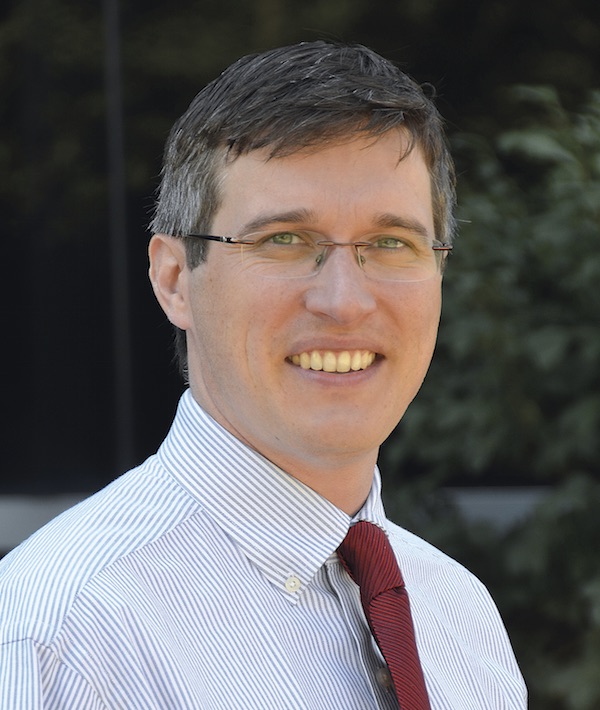
Kevin M. Bandura, Ph.D.

Kevin M. Bandura, Ph.D.

Associate Professor, Department of Computer Science and Electrical Engineering

Adjunct Assistant Professor, Department of Physics and Astronomy

Faculty Webpage

Dr. Bandura's research interests lie in uncovering the mysteries of the universe, with a particular focus on gaining a deeper understanding of Dark Energy — the term used to describe the force behind the accelerated expansion of our cosmos. This pursuit has driven him to concentrate on constructing wide-field survey radio astronomy instruments, like CHIME, to enhance our comprehension of the universe.


Graduate Research Assistants

Dylan J. Gormley

Dylan J. Gormley

Ph.D. Candidate

Research focus on RFI mitigation.


Student Workers

This could be you!

Message Prof. Kevin Bandura to apply.


Alumni


⏦ Contact Us ⏦

If you're an enthusiastic student, graduate or undergraduate, eager to dive into exciting scientific work, don't hesitate to reach out. Send us an email and let's explore some hands-on science together.


Our lab is located in the Advanced Engineering Research Building (AERB), Room 304, on the WVU Evansdale Campus.

© 2026 WVU RAIL