Cohort archive
The second summer
Six teachers — two of them back for another year — redesigned the horn mount, ran eight experiments at Green Bank, and taught three groups of students.
- 6teachers
- 5states
- 2returning
- 6weeks
- Morgantown + Green Bank
Who was here
The 2018 cohort
Six teachers, two of whom had done the program the summer before and came back to go deeper. Two undergraduate researchers joined them for the season.
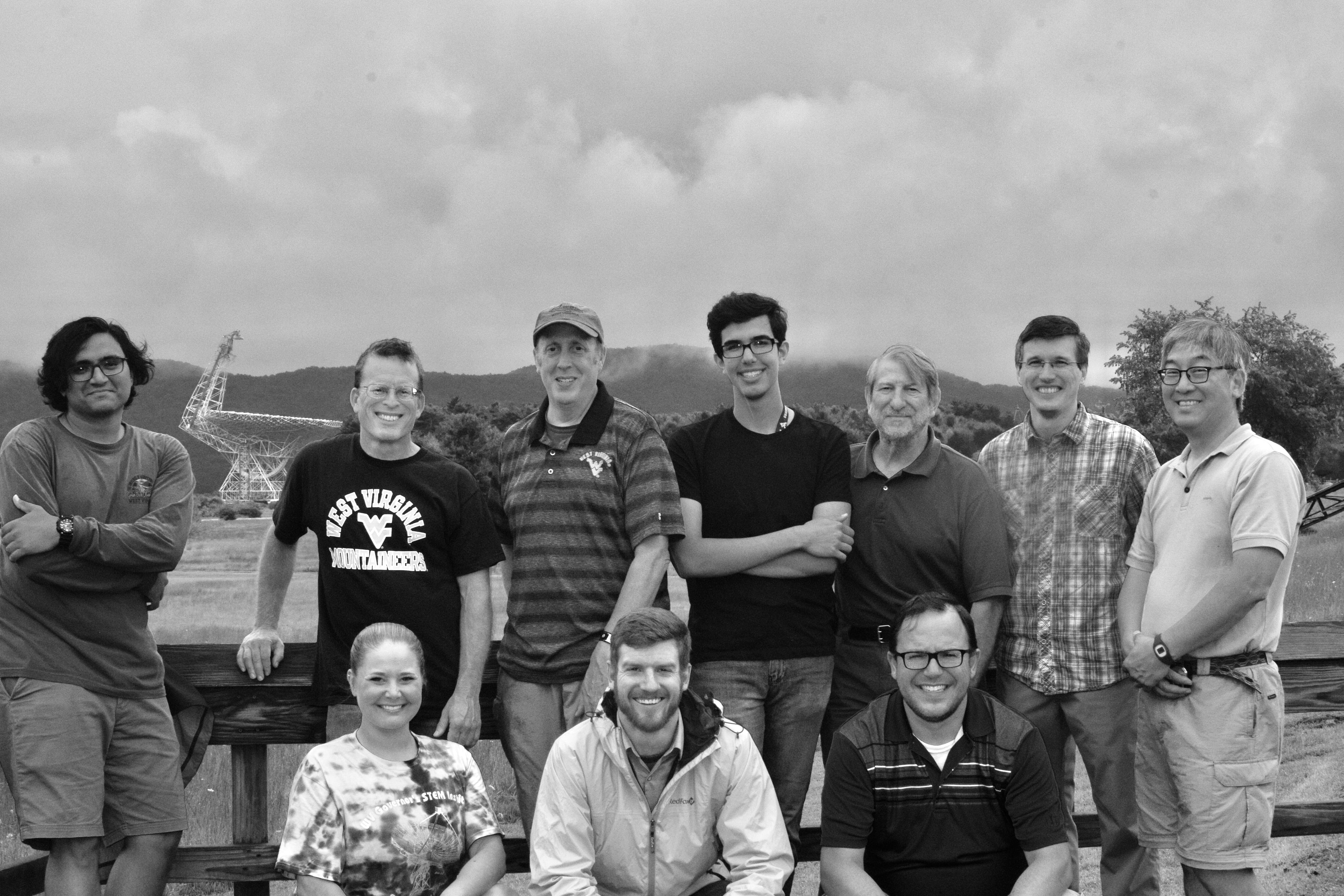
- John Makousreturning NC
- Howard Chunreturning RI
- Alexis Emch WV
- Daniel Bonnette WV
- Tad Herman NY
- John Clarke FL
Joined by two undergraduate researchers, from WVU and Toronto
01
Foundation
As in 2017, the first four weeks were daily lectures building a foundation in astronomy and digital signal processing — the celestial sphere, astronomical and solar time, Kepler's laws, the H–R diagram, galaxies, dark matter and galaxy rotation curves on one side; signal basics through to the fast Fourier transform, modeled on an undergraduate DSP course, on the other.
This cohort also set aside dedicated time to write lesson plans and classroom activities, working out how to fold signal processing into what they already teach day to day.
02
The laboratory sessions
Every lecture was followed by a lab. This year the 2017 material was revisited, but far more time went on mastering it rather than getting through it. The labs make abstract DSP concepts tangible through software-defined radio: GNU Radio is free and open source, runs on cheap off-the-shelf hardware, and the structured sequence ends with each teacher writing their own software spectrometer.
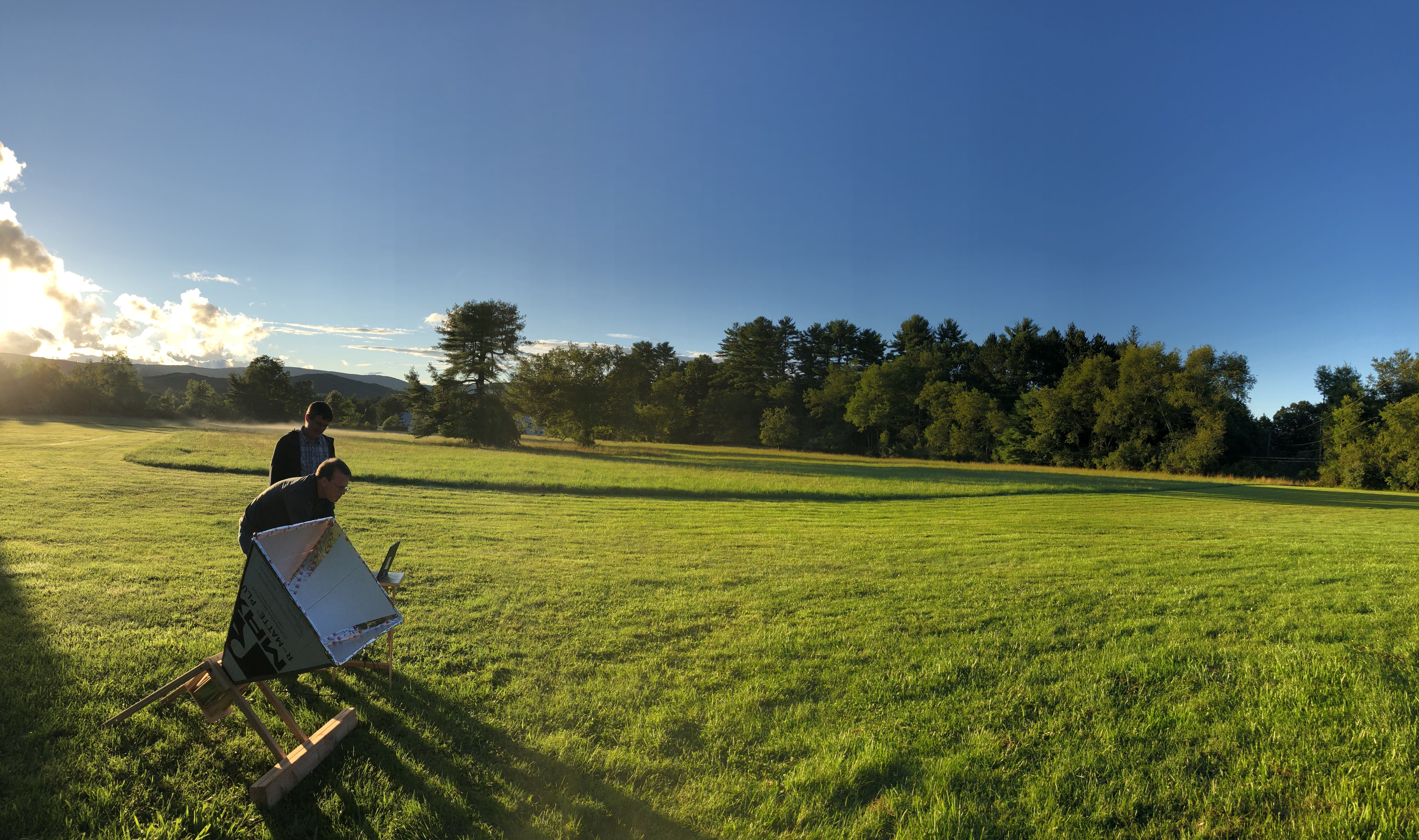
They then built the telescope — soldering a low-noise amplifier from very small components, and fabricating a horn antenna from materials and tools you can buy at a hardware store. The horns were built in the industrial design workshop at WVU, again as an assembly line. Between the spectrometer, the LNA and the horn, every teacher had a working radio telescope by the end of the four weeks.
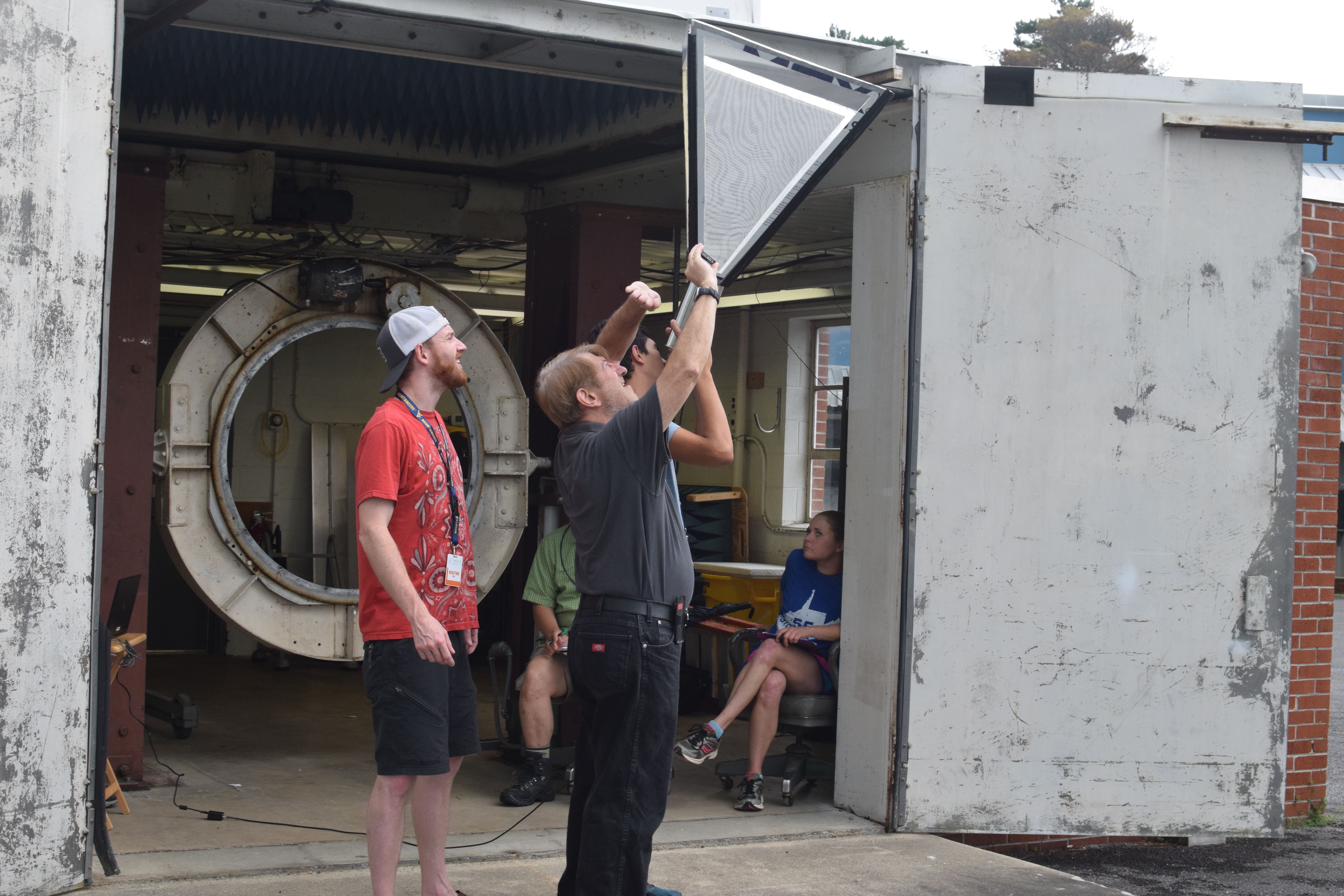
One thing this cohort added: they designed and built a new iterative horn antenna mount themselves. Testing followed at WVU, with LNA performance measured in the lab and the noise figure taken inside the Faraday cage in the RF room.
The two returning teachers spent their second summer going a level deeper into software-defined radio for radio astronomy — learning the internals of GNU Radio well enough to write their own blocks and programs, streamlining the data acquisition, and building DSP teaching tools inside GNU Radio.

GNU Radio — free, open source, and the same stack the lab uses on real instruments. 
The parts you solder are a couple of millimeters across. 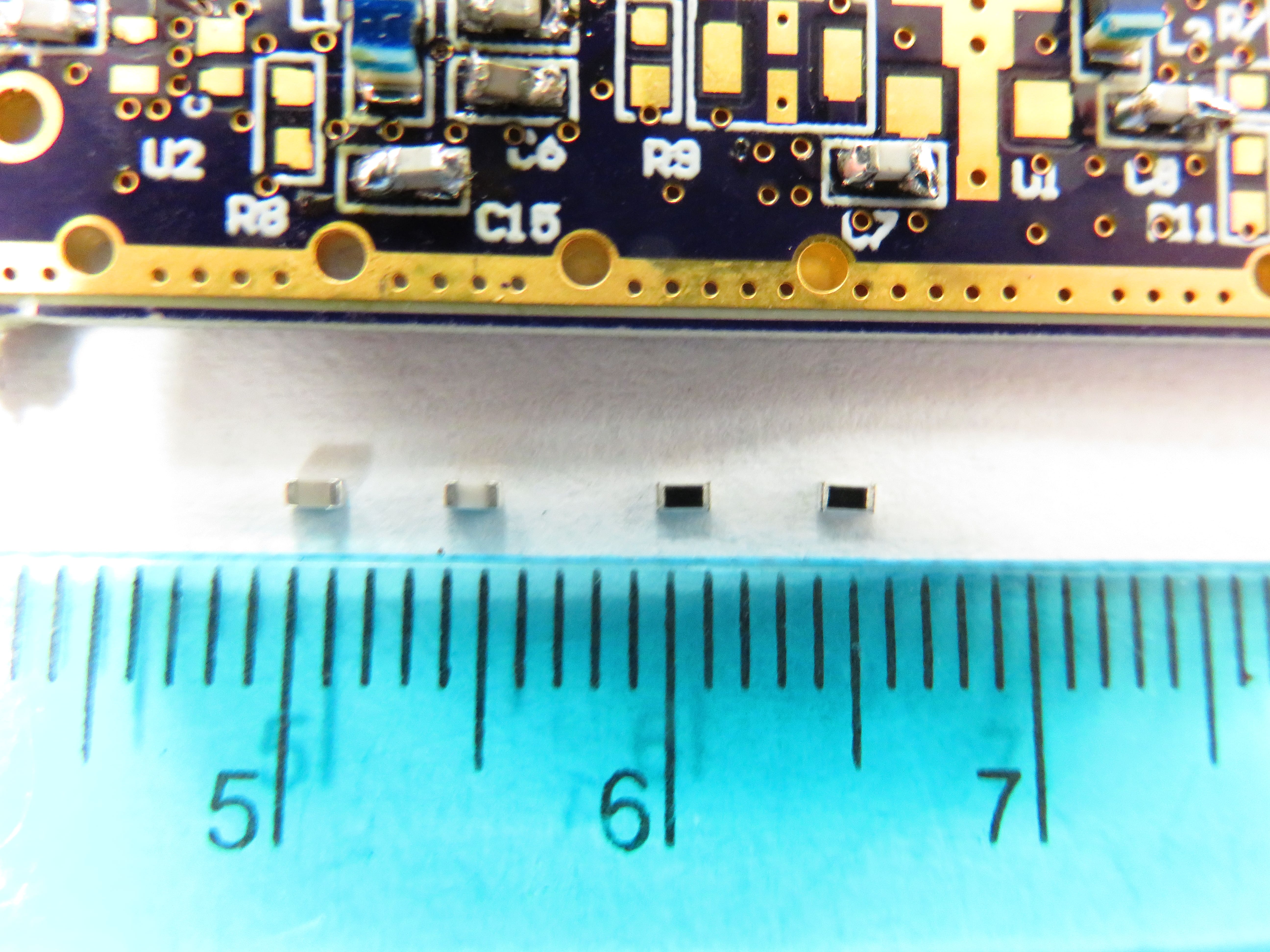
Against a millimeter scale. 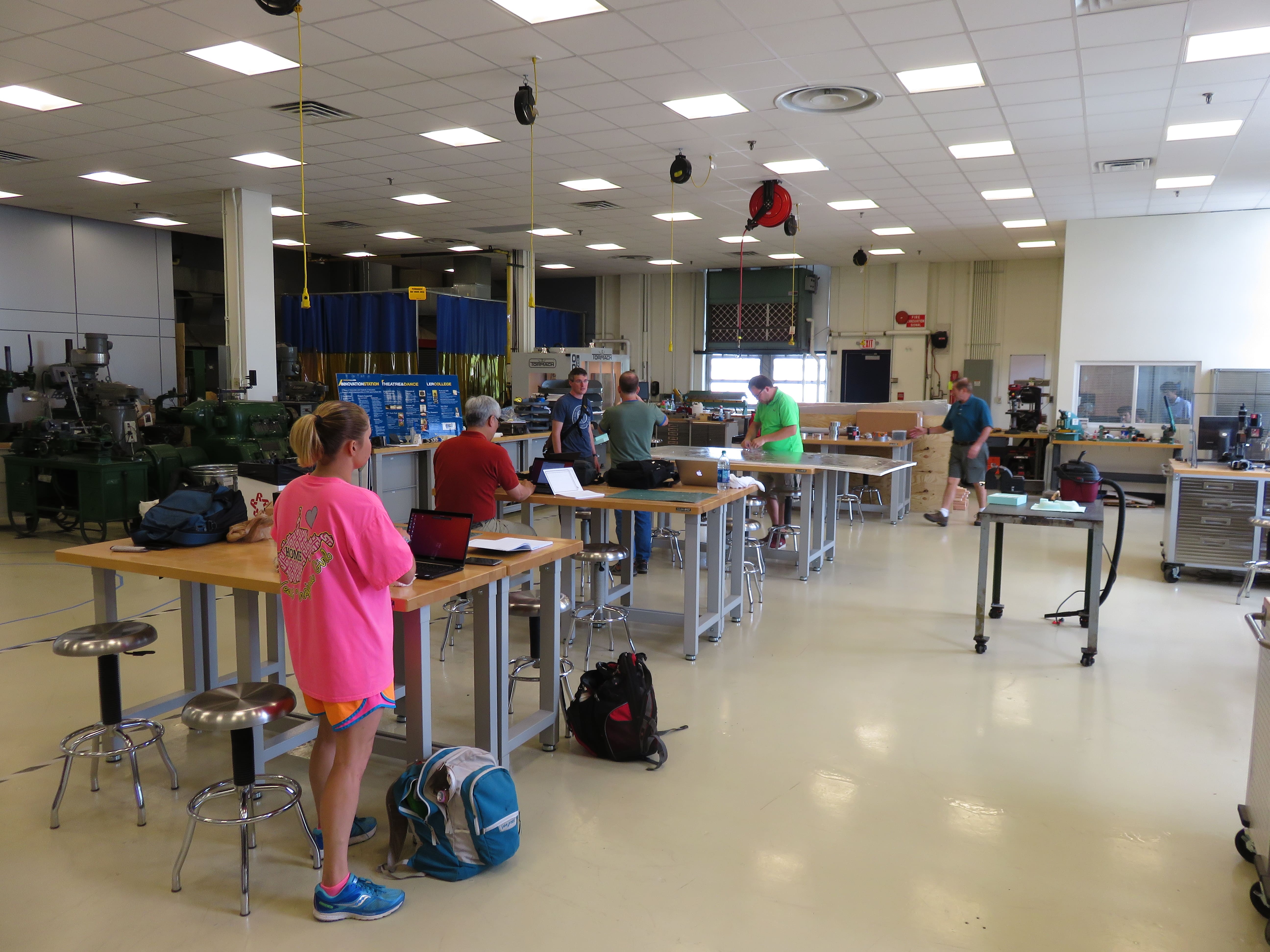
The workshop at WVU, where the horns were built. 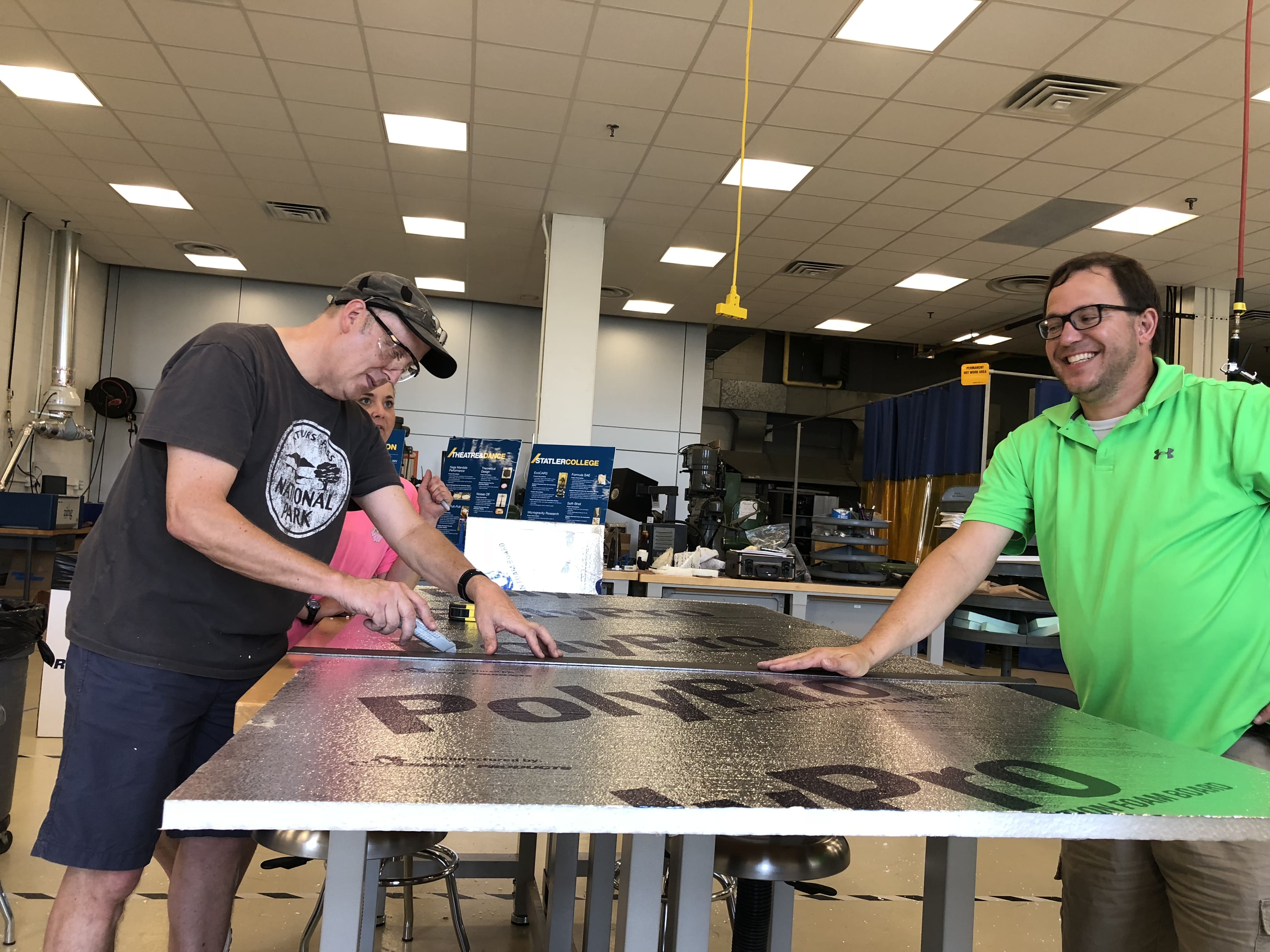
Marking out. 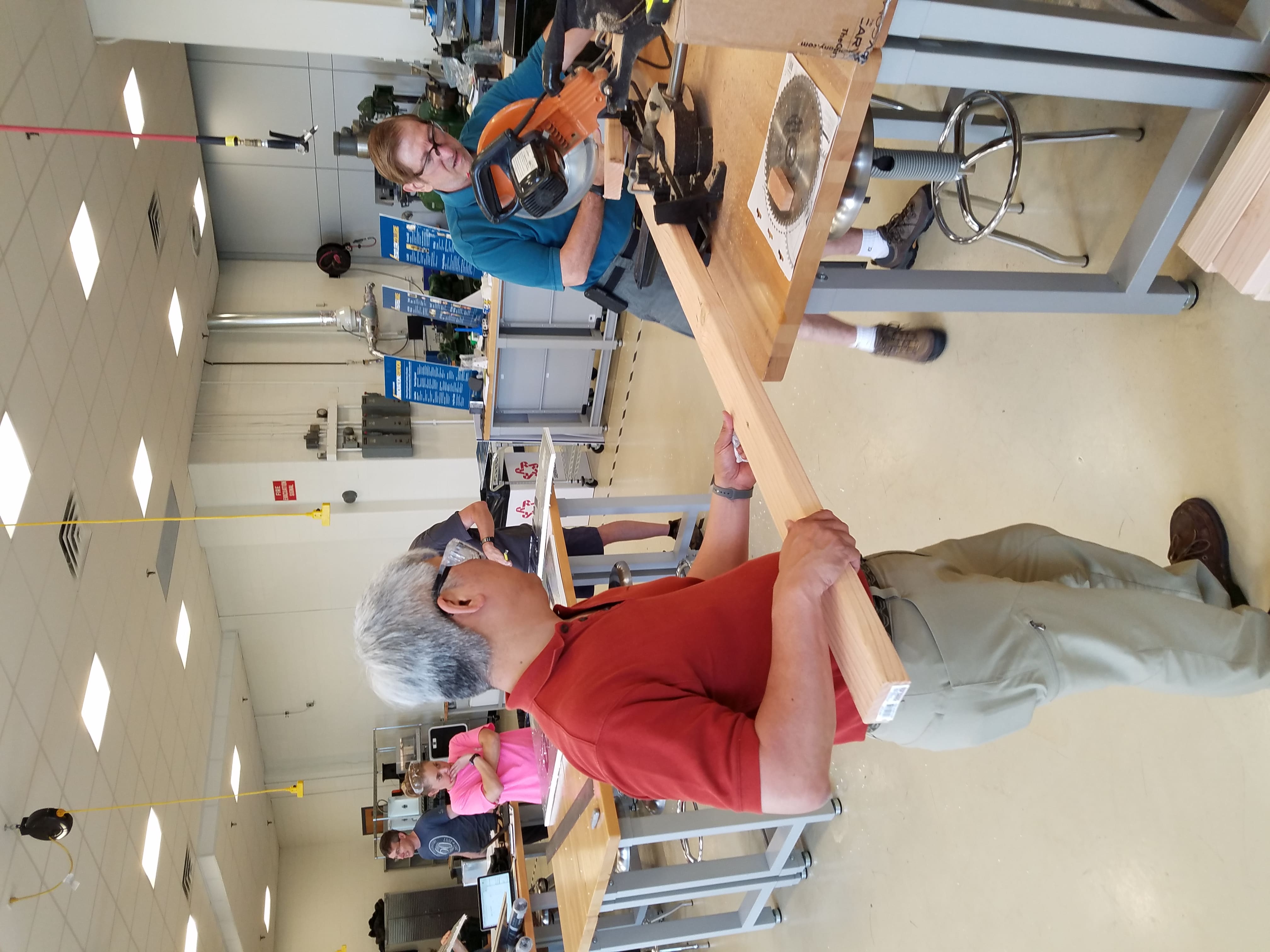
Cutting the mount — this cohort redesigned it. 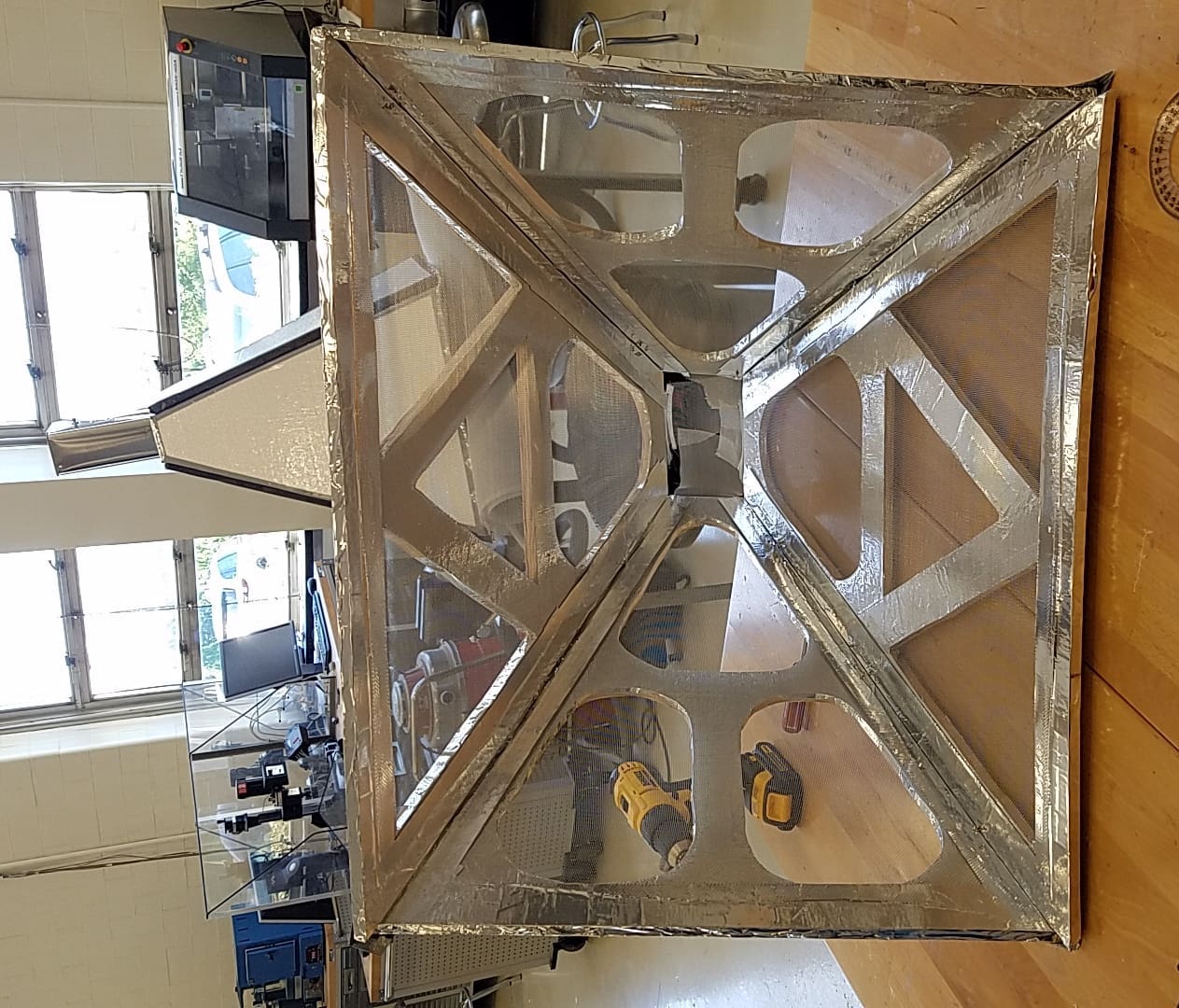
Looking into a finished horn. 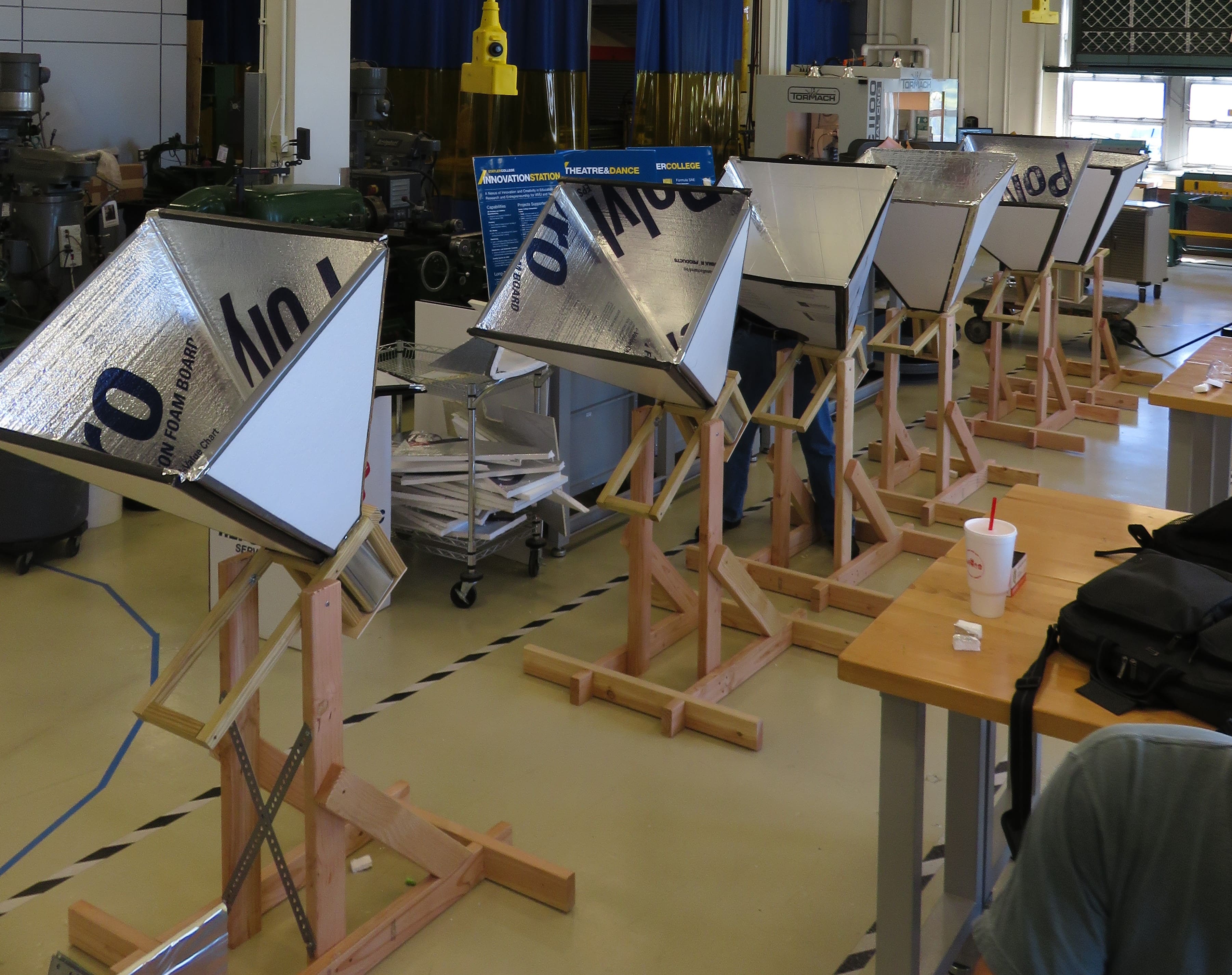
The assembly line's output: one working telescope each. 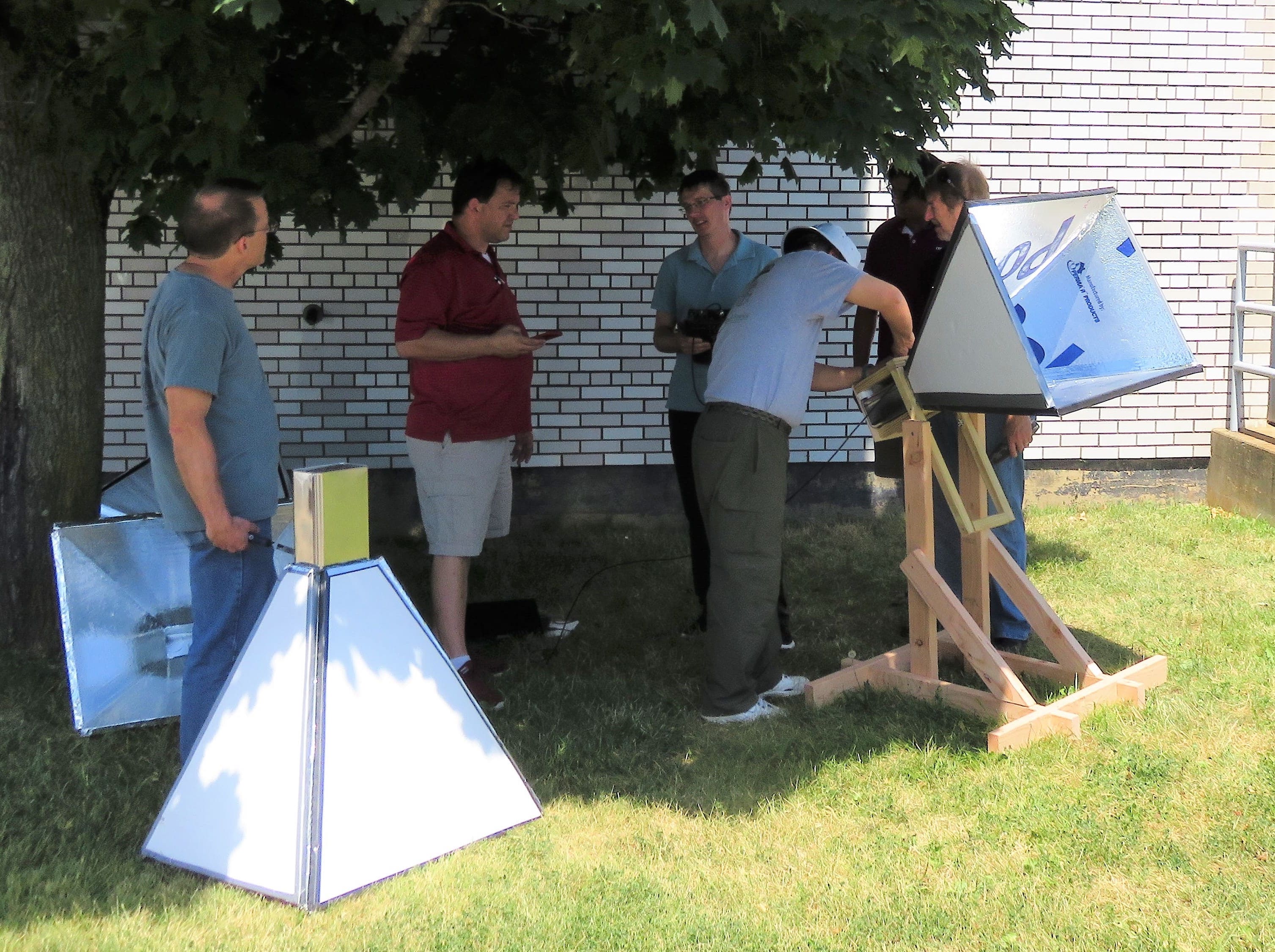
First tests, straight outside the building. 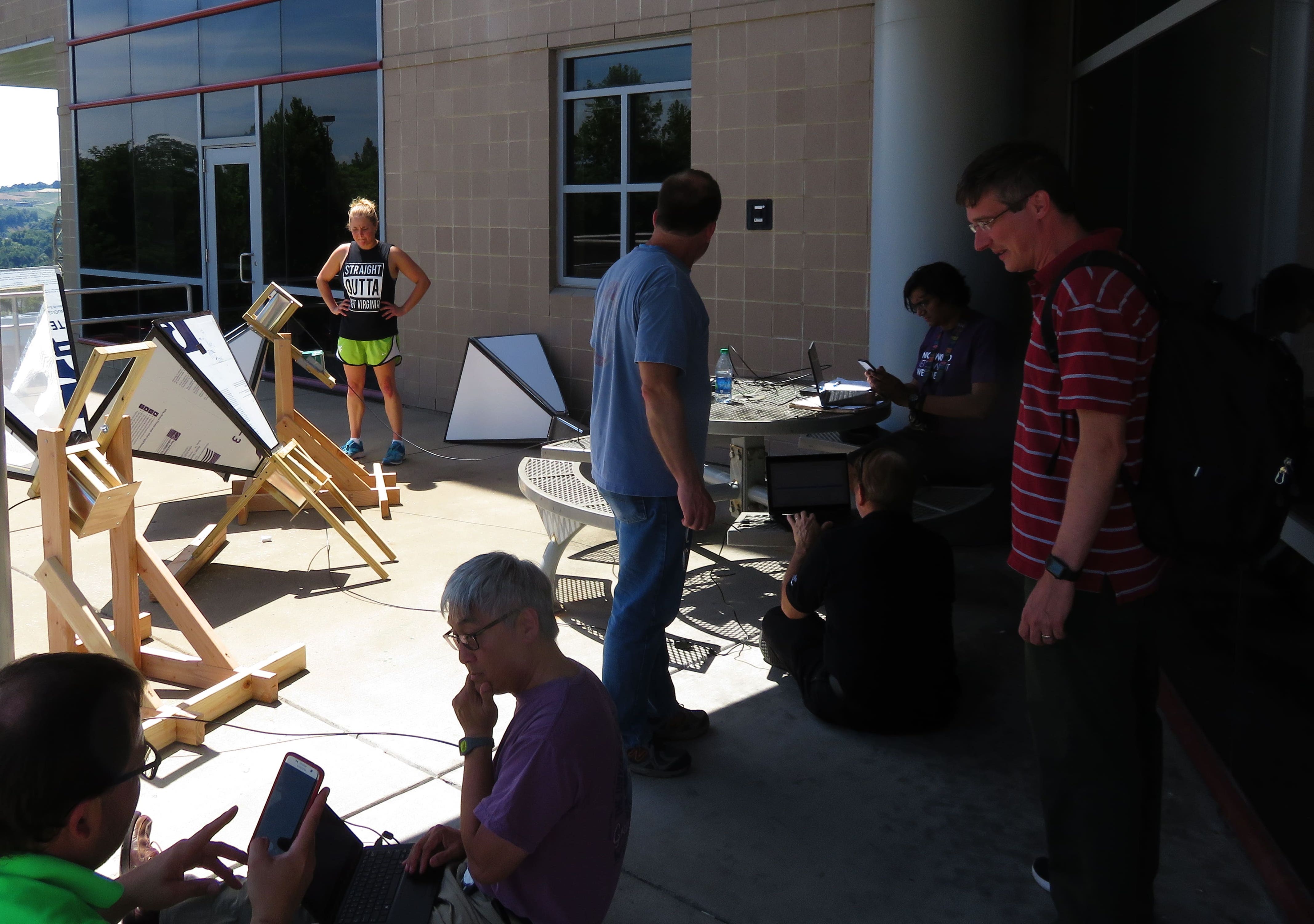
Data acquisition, worked out on the spot.
03
Science experiments
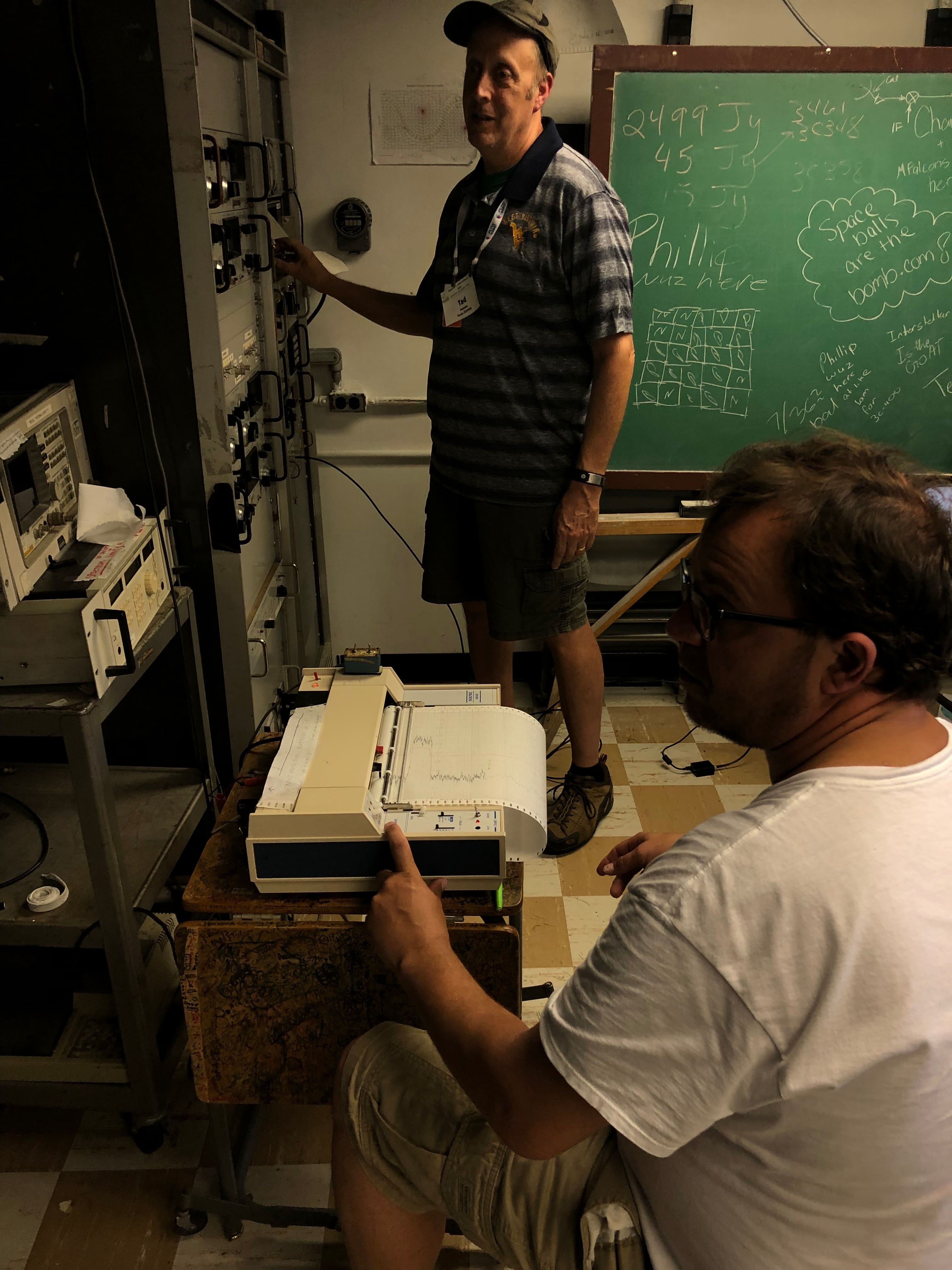
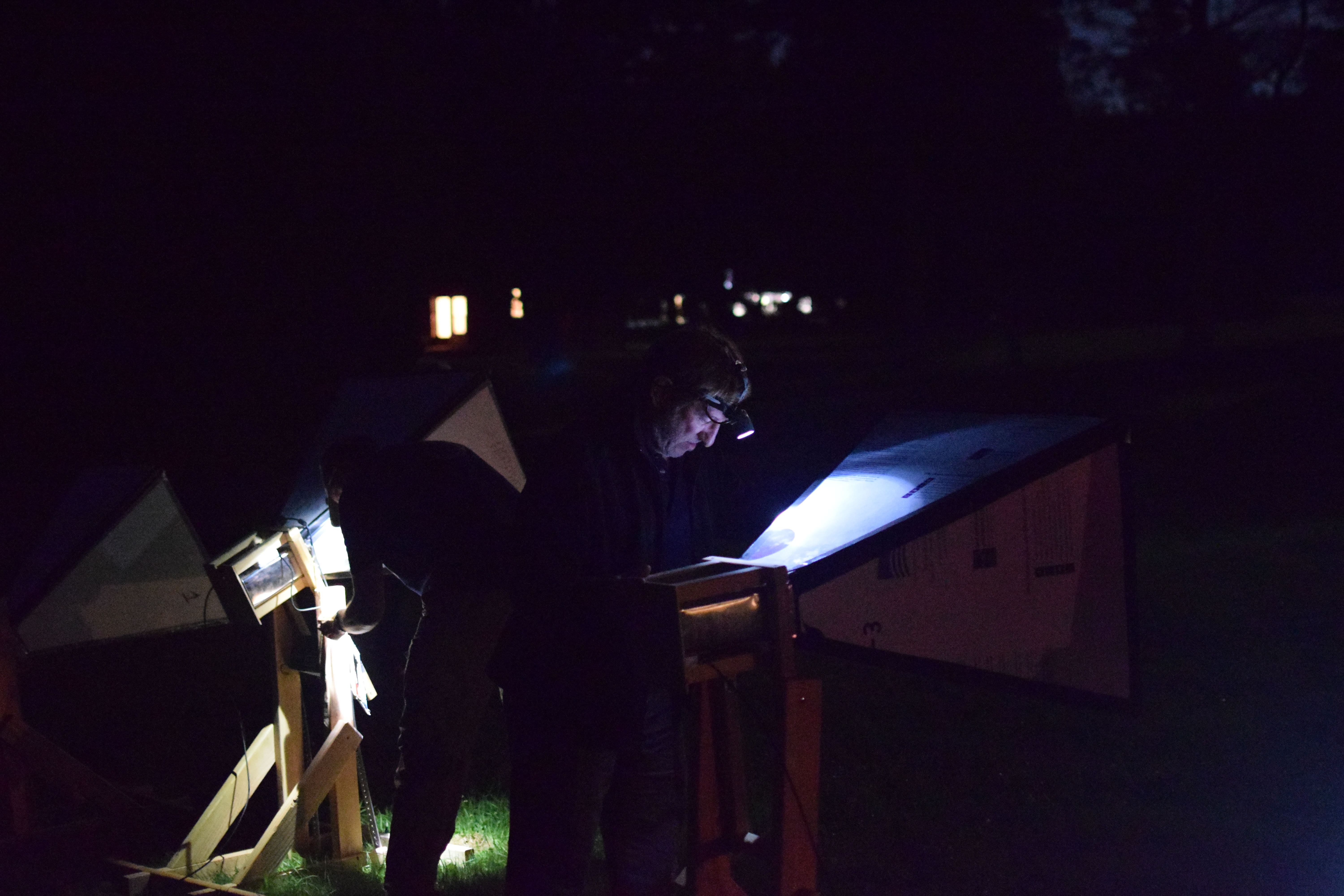
The horns were tested in Morgantown, then taken to the Green Bank Observatory for the last two weeks. The teachers went through the observatory's outreach program, including training on the 40 Foot telescope — and tapped its signal, routing it through the SDR dongle and the GNU Radio spectrometer they had written at WVU.
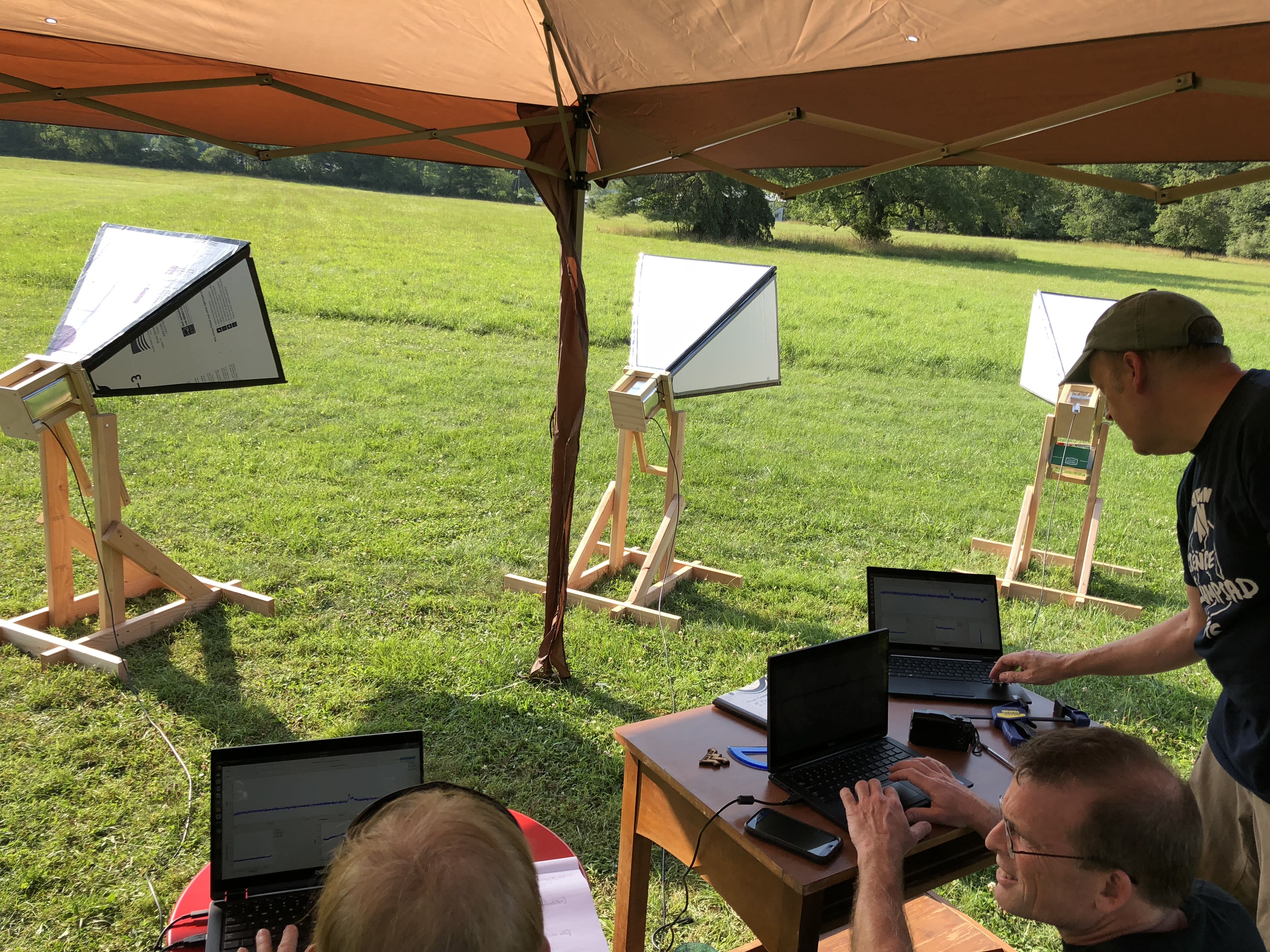
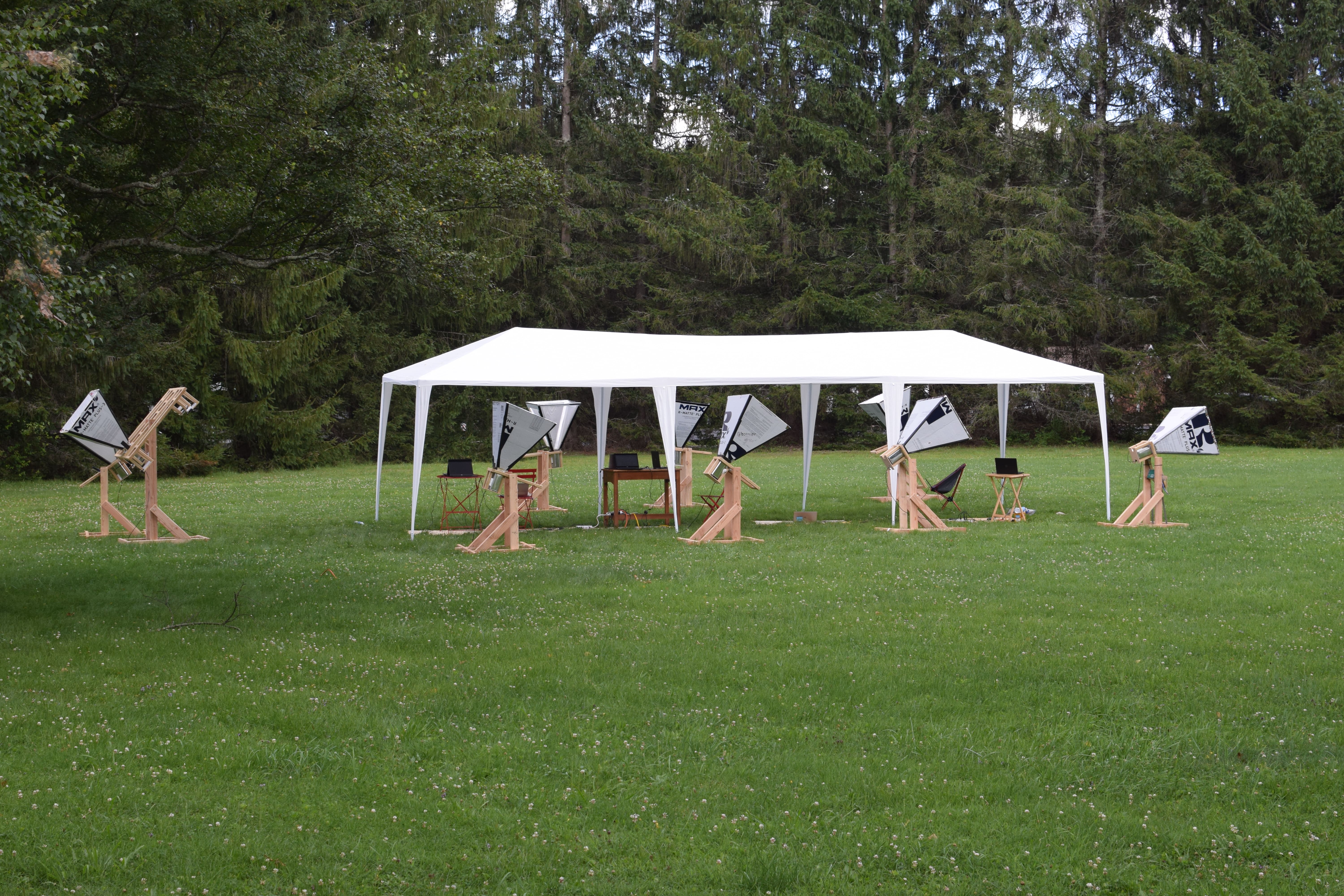
Most of the time went on observing with the horns. The teachers wrote their own plan to map the whole sky, and used the facilities on site to keep improving the instrument. Eight distinct experiments came out of the two weeks:
- Comparative analysis of LNA performance
- Comparative analysis of horn response
- Optimization of horns
- Optimization of data acquisition software
- Analog data from the 40 Foot vs. the digital GNU Radio back end
- Measuring the horn beam pattern
- Milky Way velocity curve
- All-sky map of neutral hydrogen
04
Students and lessons
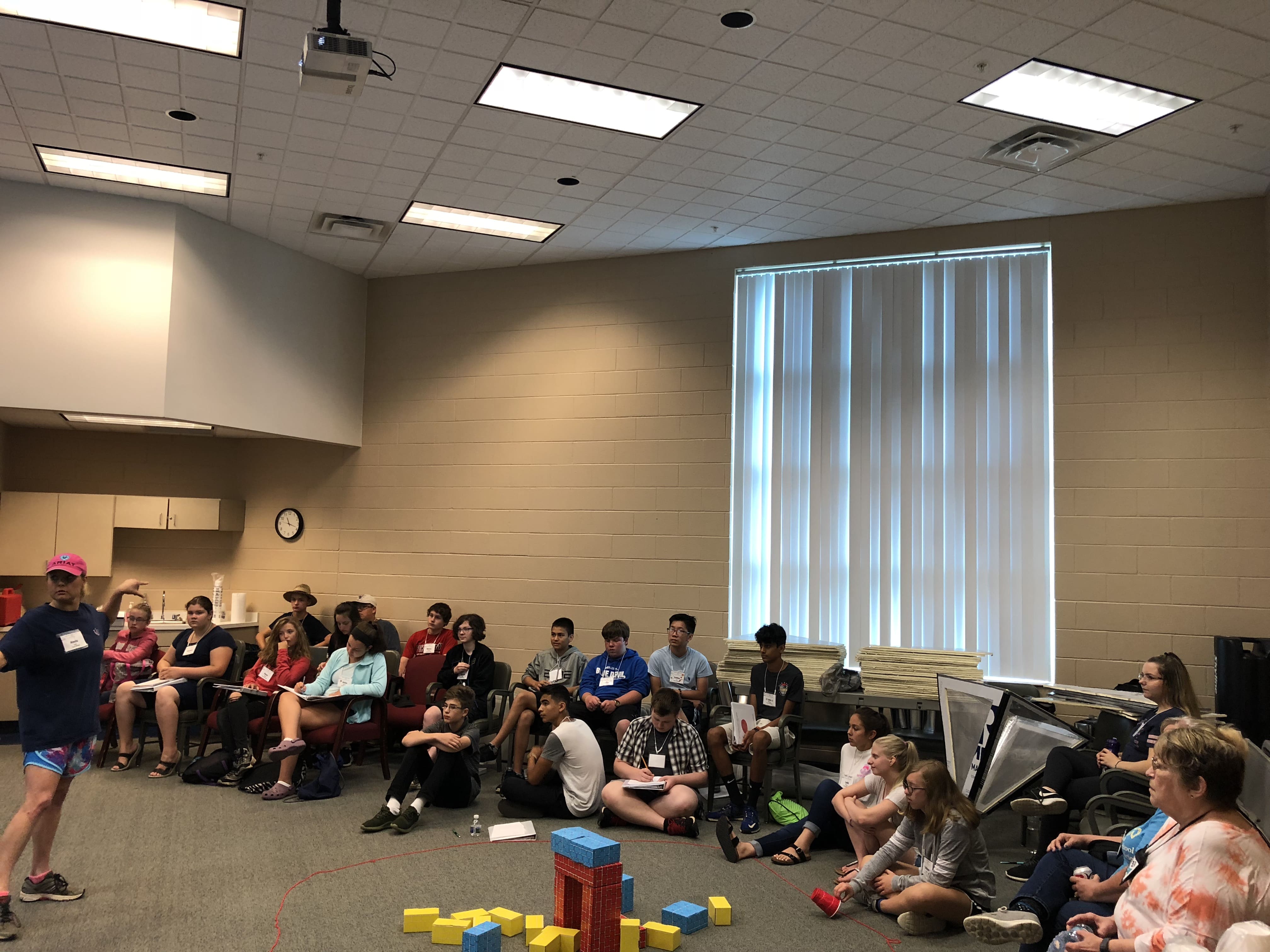
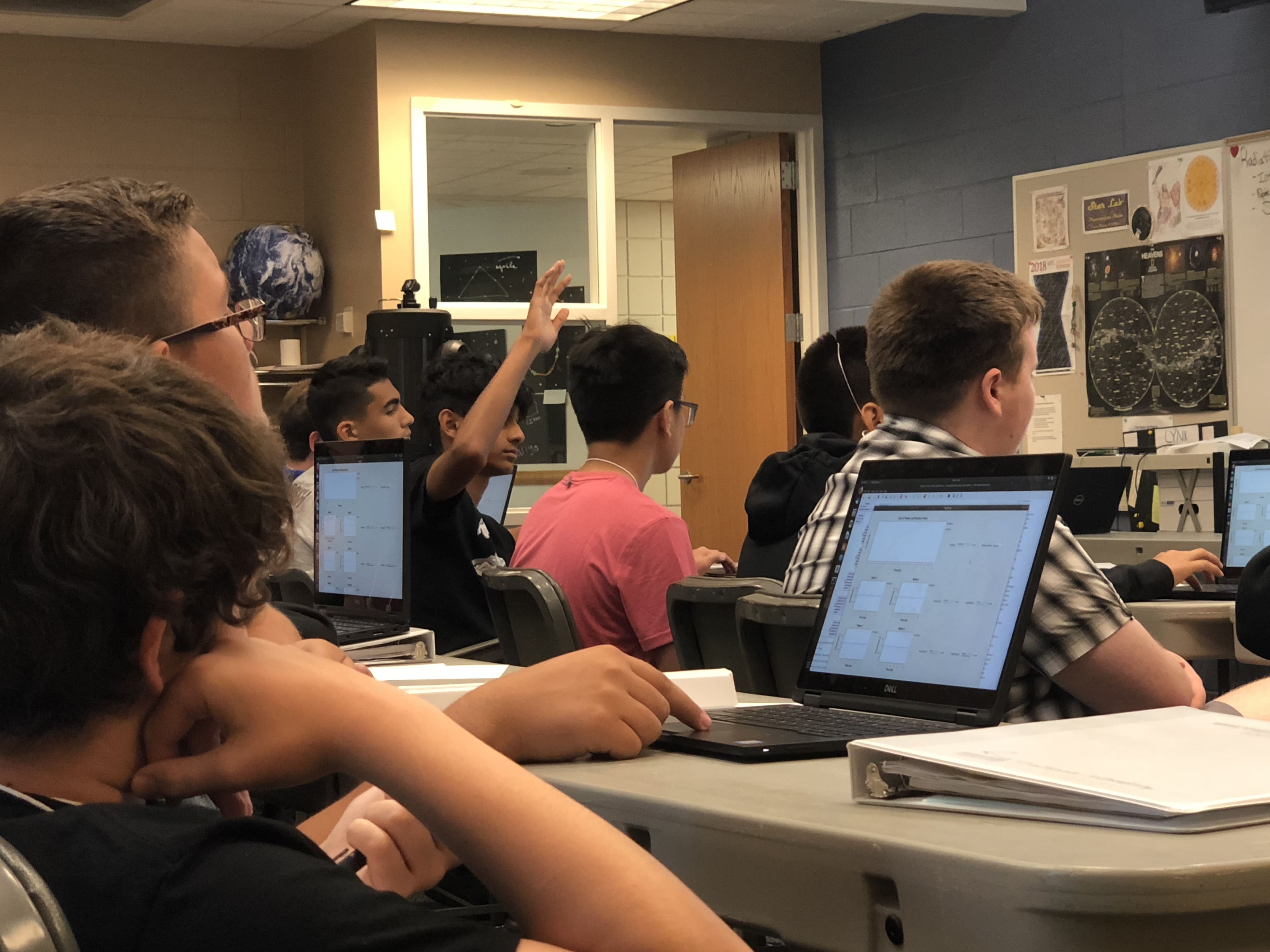
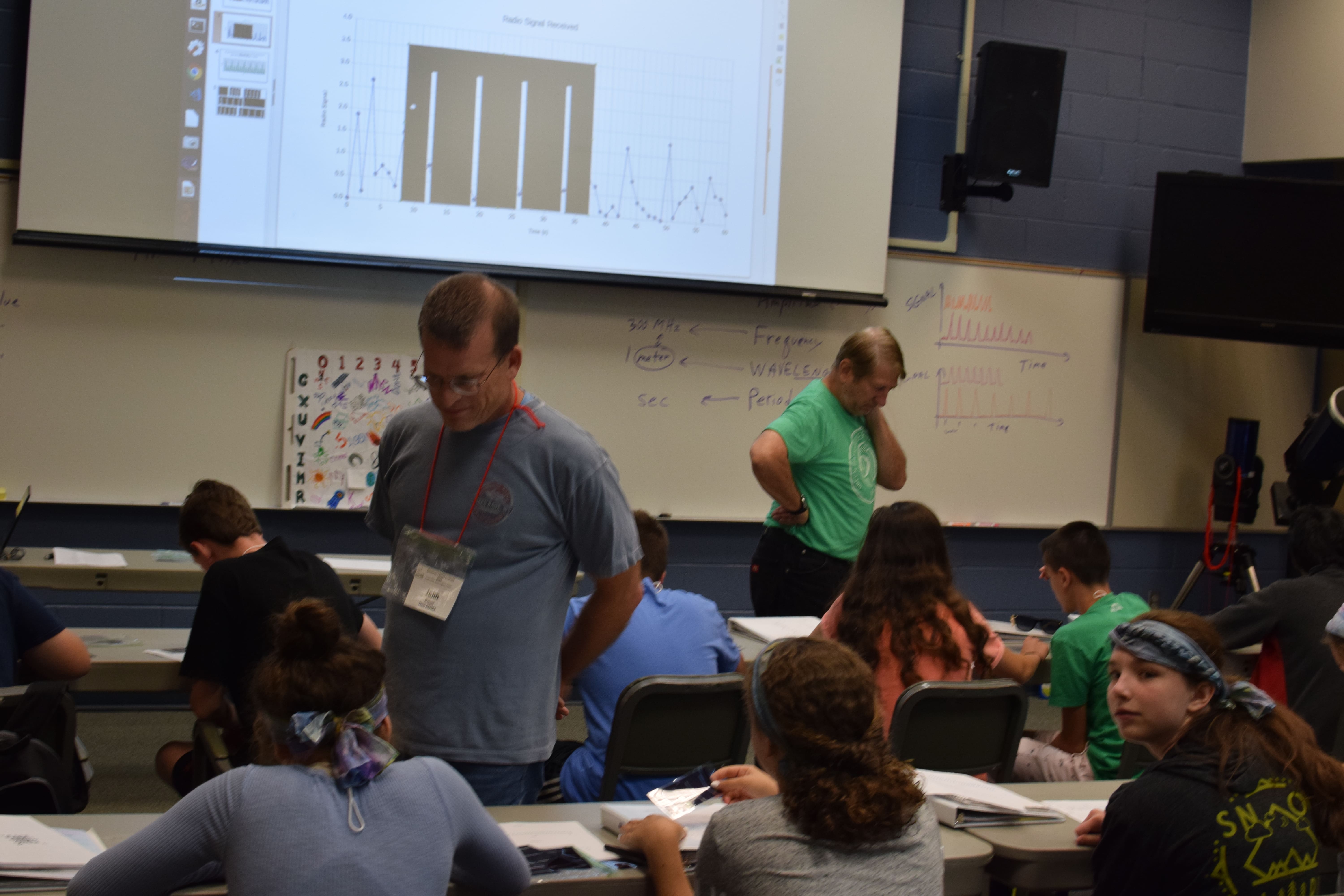
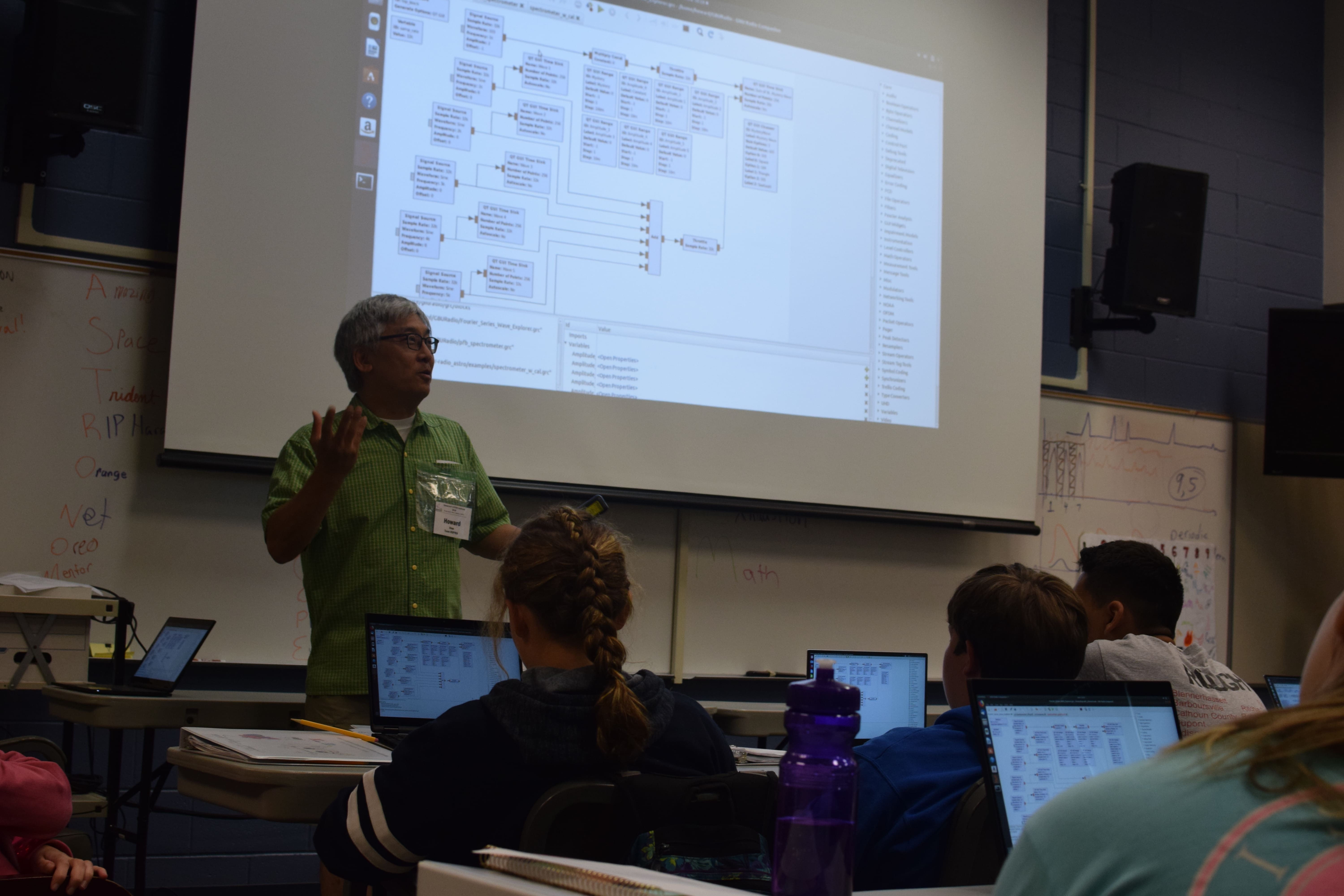
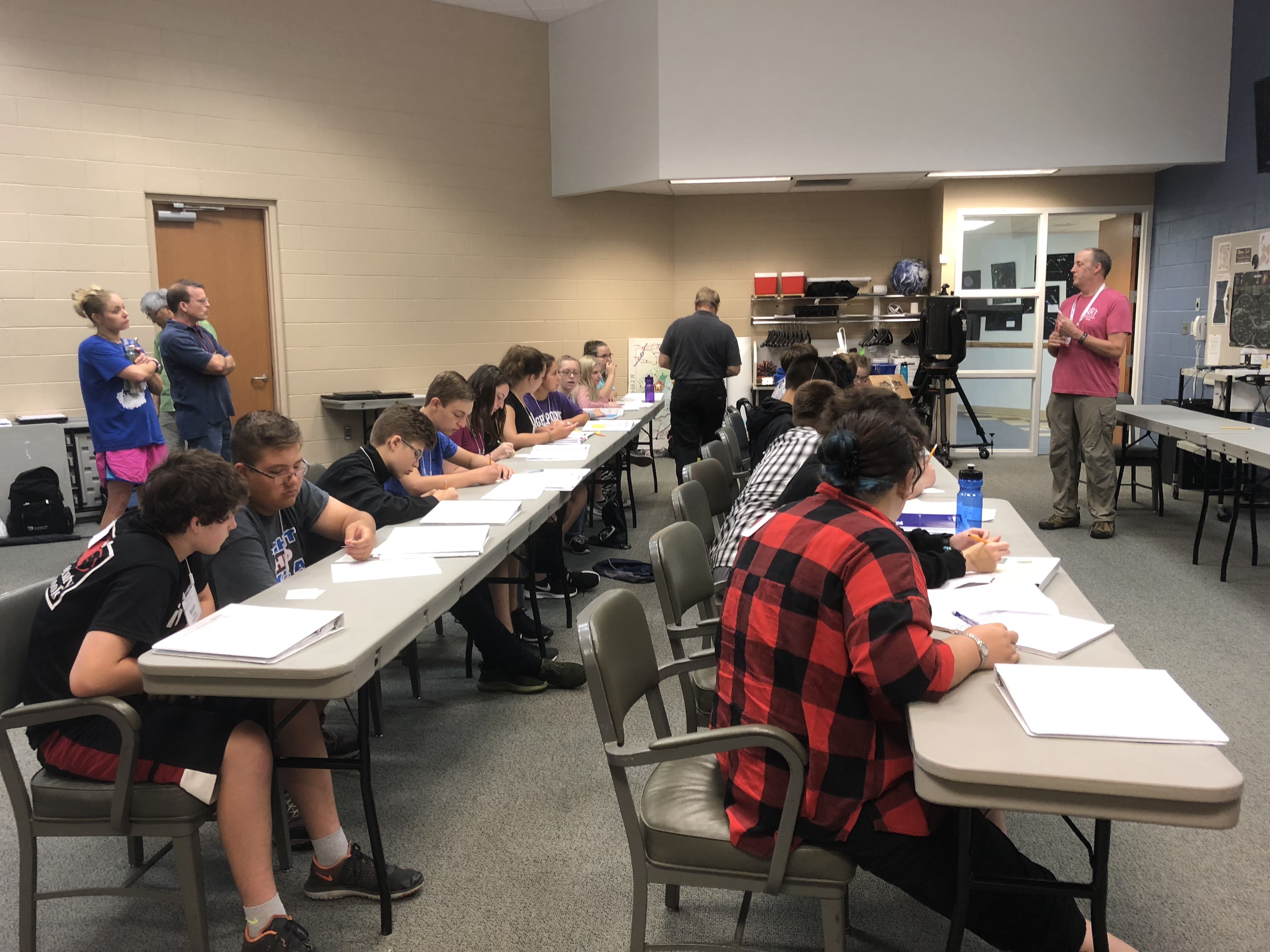
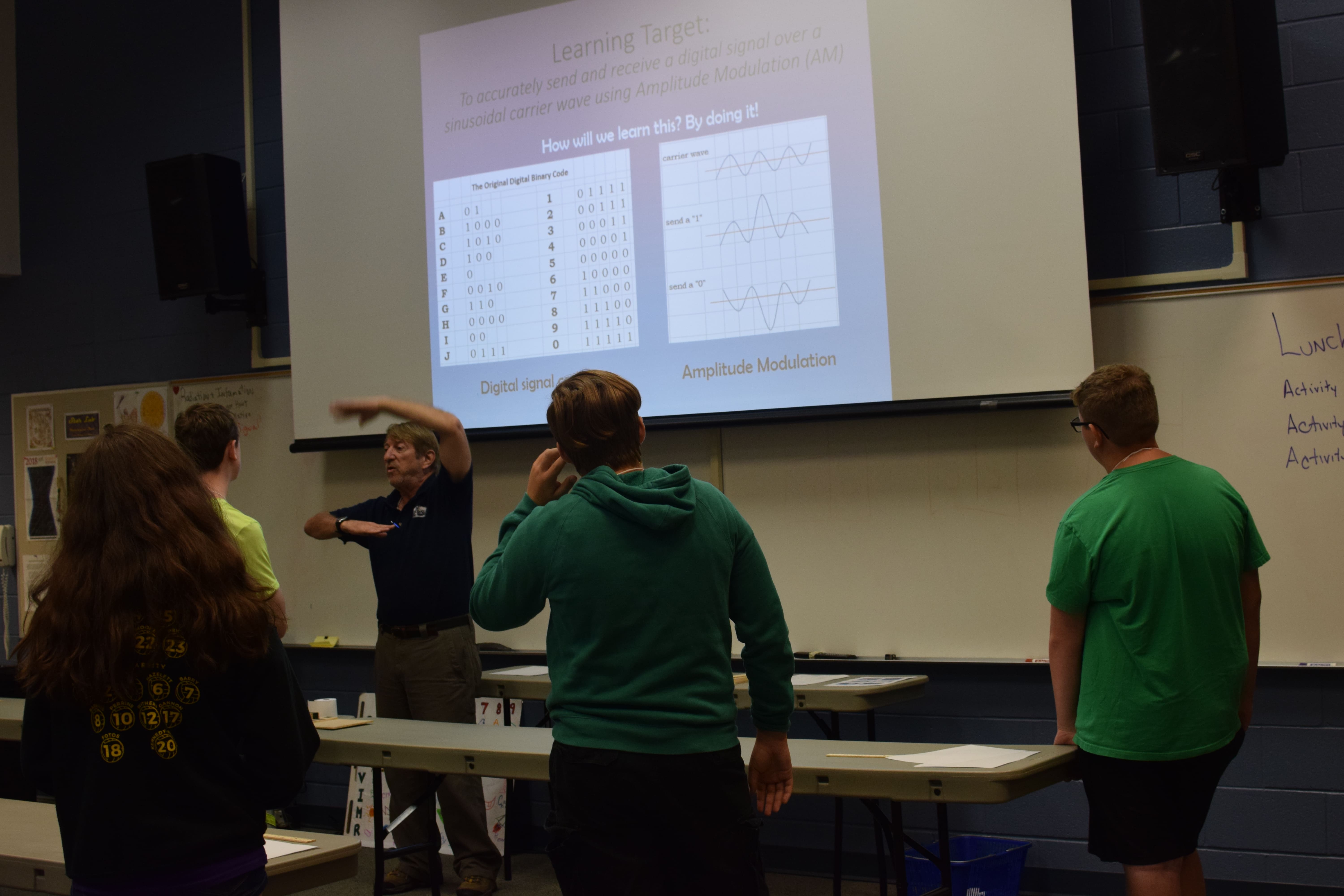
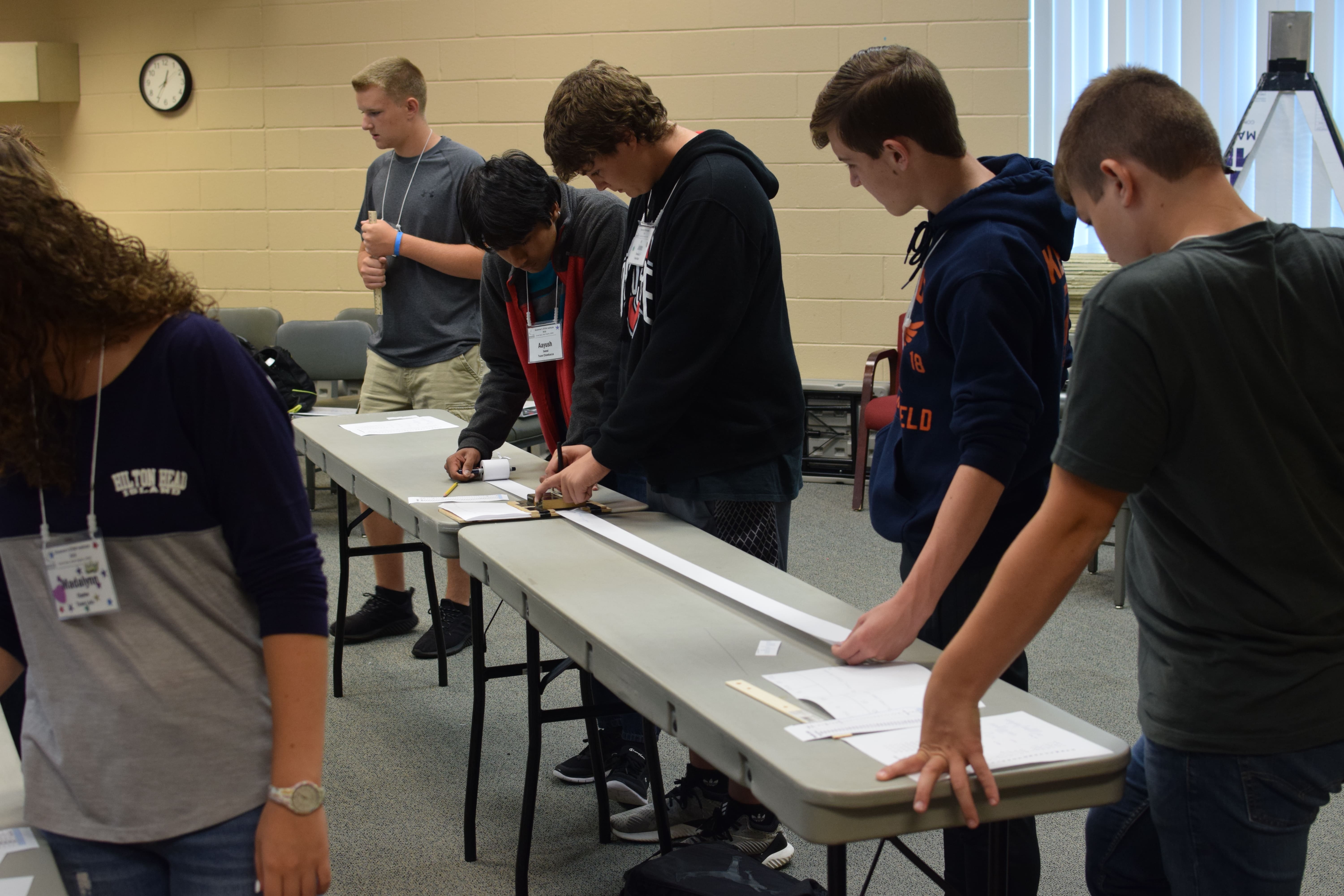
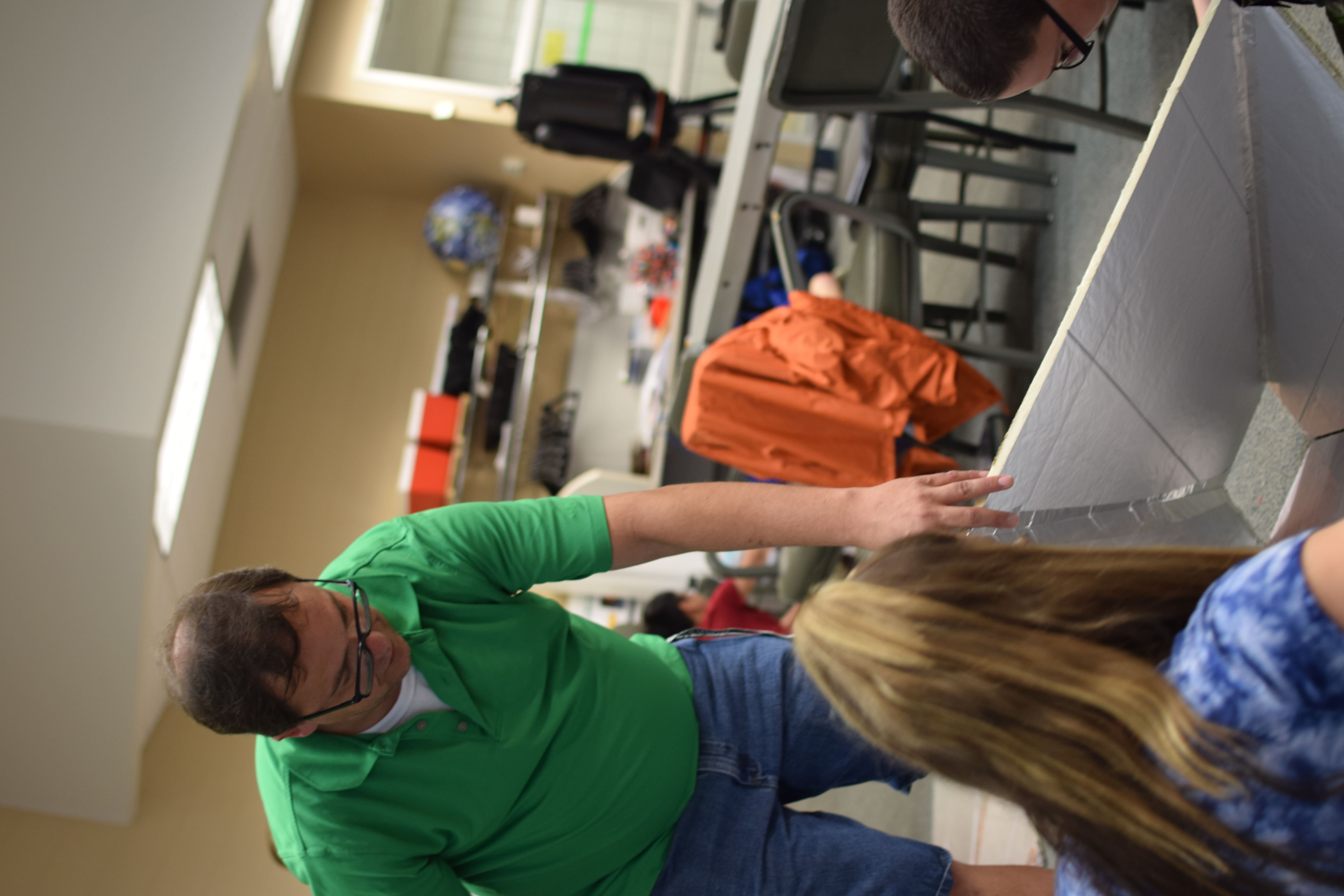
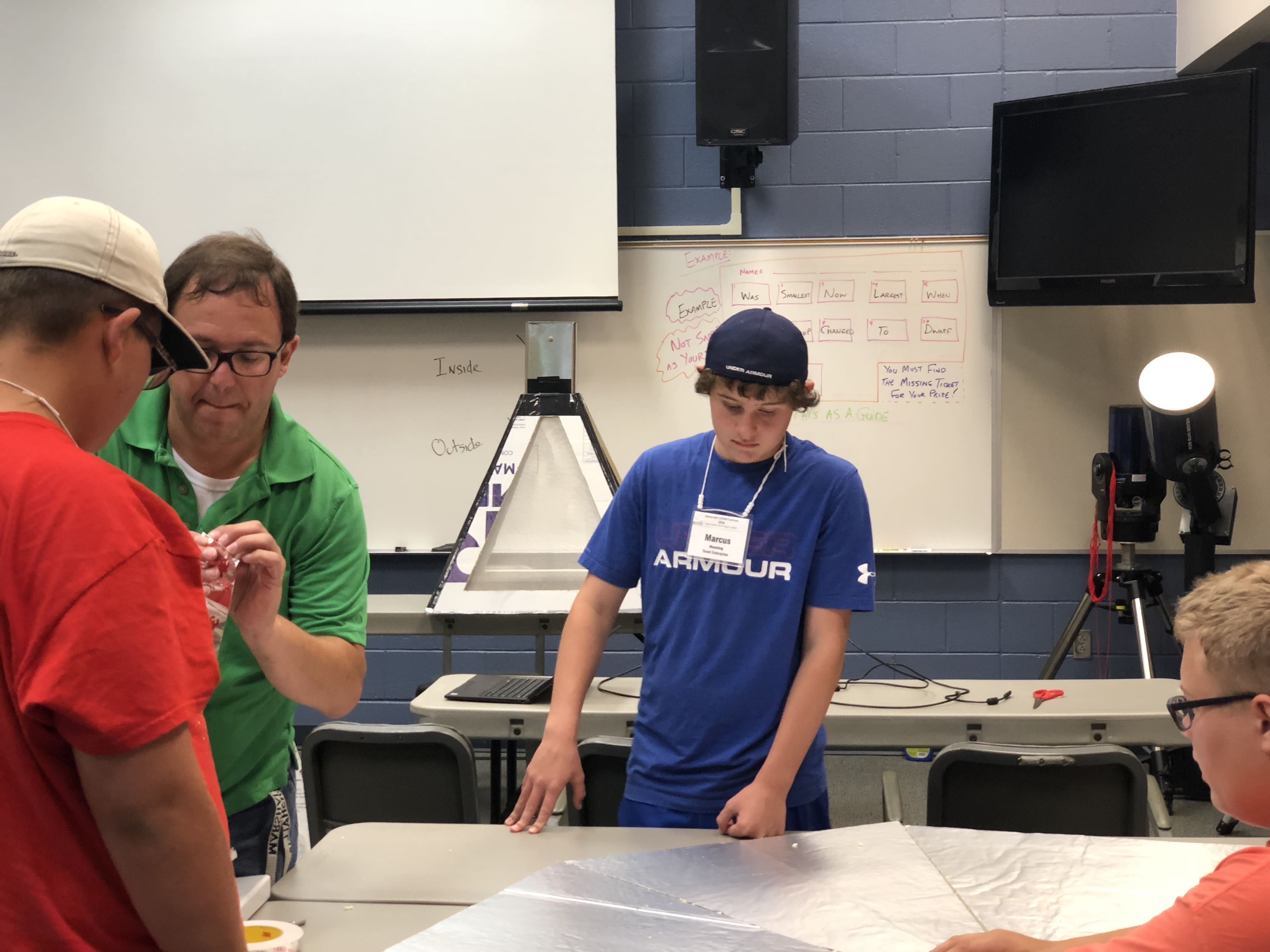
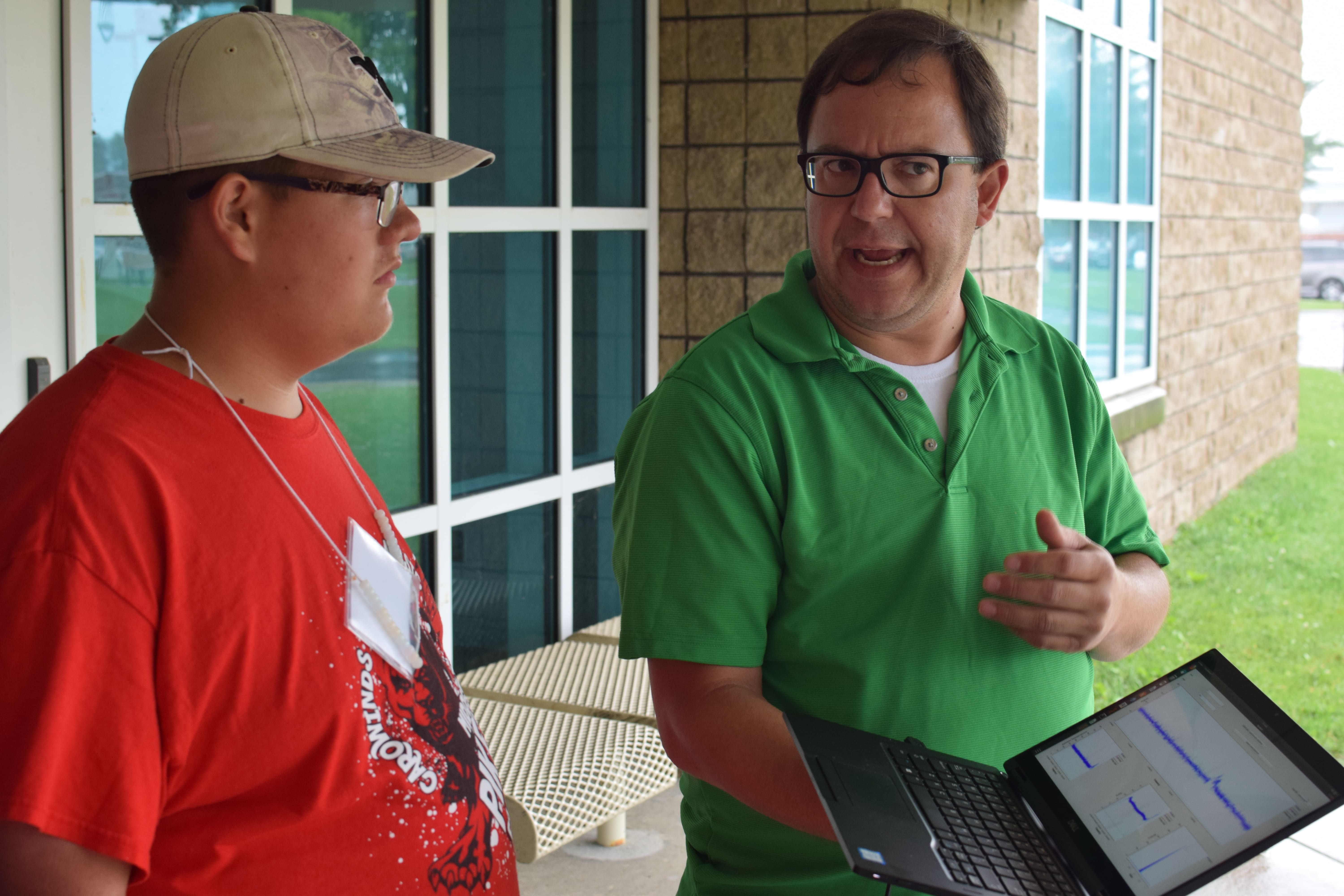
While at Green Bank, the cohort worked with the West Virginia Governor's STEM Academy — a chance to turn the research experience straight into lesson plans and run them. They taught DSP in radio astronomy through a series of hands-on activities across a couple of days, with three separate groups of students.
From the inside
Tad Herman kept a blog
One of the 2018 teachers wrote up the whole summer, day by day, as it happened.
05
Undergraduate research
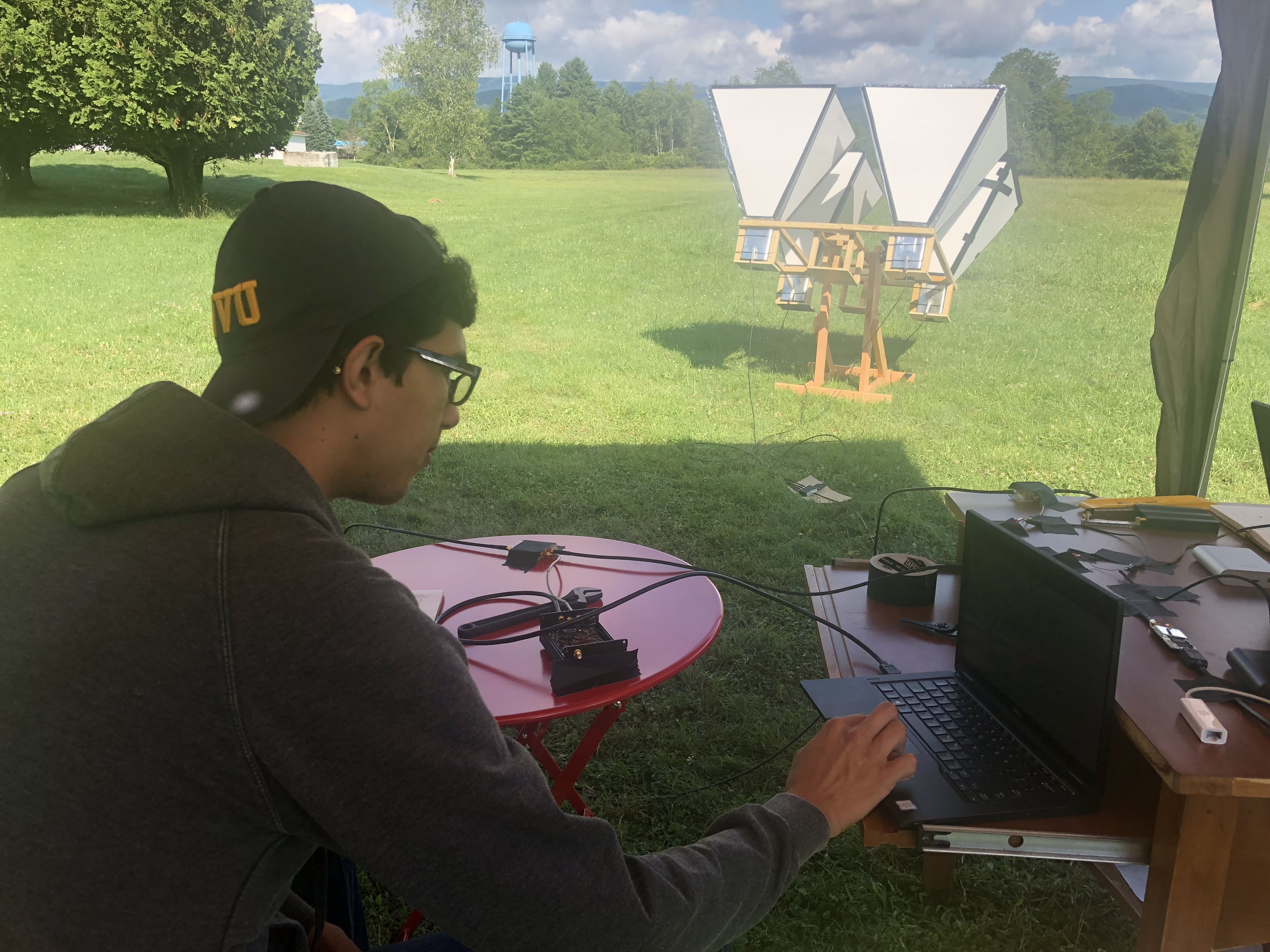
The 2018 program also took on two undergraduates — Andy Dycke from the University of Toronto and Rhys Lockhart from West Virginia University. They took the same inexpensive horn hardware and pointed it at a harder problem: detecting radio transients.
Working with an aperture array of horns and custom data acquisition software, they set out to detect the brightest pulsars — turning a classroom instrument into a time-domain one.
Everything they used
The lessons are still online
44 lessons covering the astronomy, the hardware, the signal processing and the labs — free, and still maintained.
← DSPIRA program Cohorts 2017 2018 2019