
Module
Astronomy
The science the telescope is for — coordinates, the Milky Way, and measuring its rotation.
8 lessons, in the order they are meant to be worked through
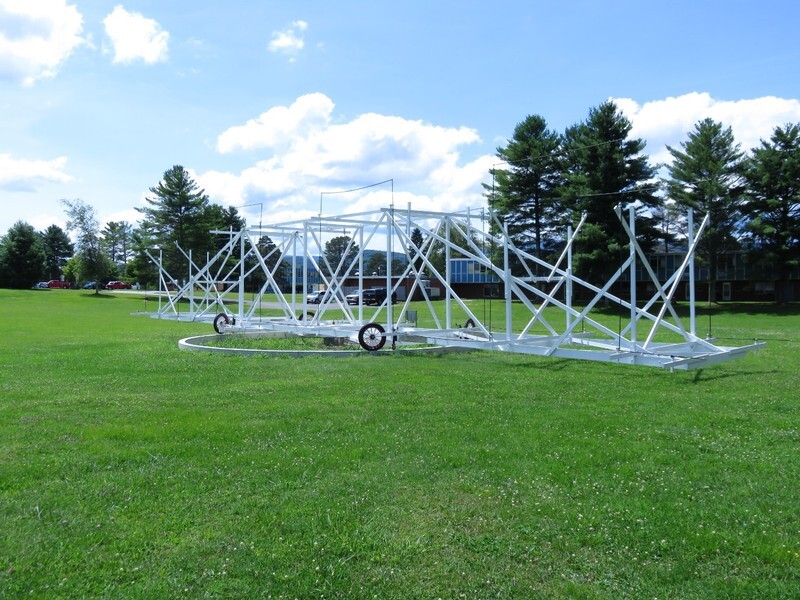
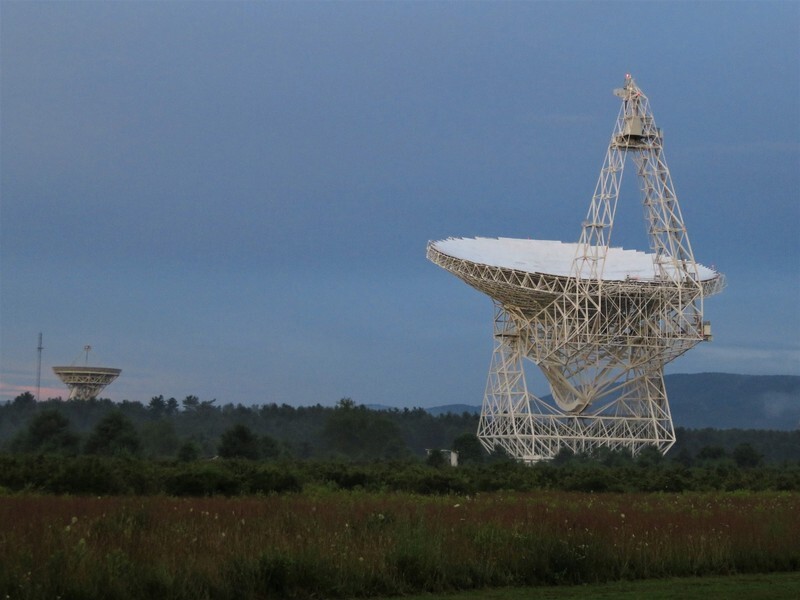
Karl Jansky discovered radio waves from beyond Earth in 1932, launching radio astronomy. His telescope is pictured at right. Astronomers increasingly needed engineers to build better detectors for their observations. This, in turn, was followed by new discoveries by these scientists using the instruments. The new discoveries motivated the engineers to design bigger and more innovative ways of receiving and grooming the data. Theory and technology advanced together, taking us from faint radio static to the first black-hole image. Telescopes now detect fast radio bursts across the sky. The image below is the Green Bank Telescope in West Virginia.
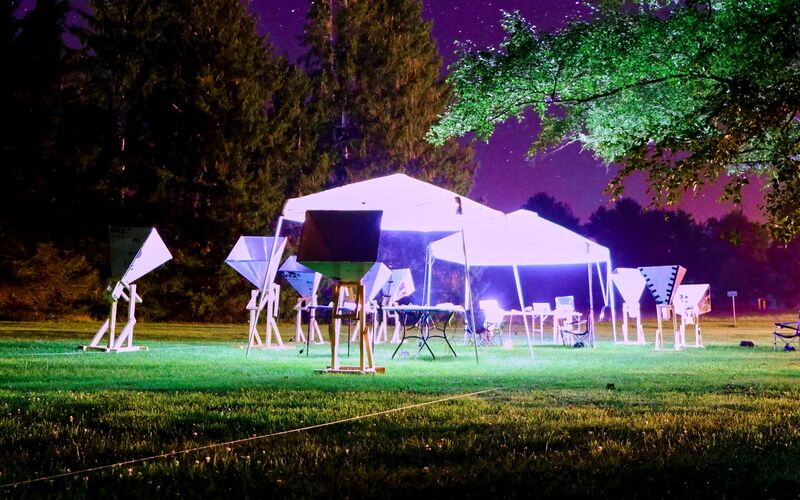
The DSPIRA program truly encompasses the full nature of this symbiotic relationship between Science and Engineering. You can now build a simple horn telescope to receive and interpret astronomical radio signals. The Receiver Electronics and Software Setup modules on this website take you through getting the instrument ready.
This module builds the astronomy knowledge needed to use a horn telescope. Its observations and research activities suit high school students and hobbyists.
Astronomy topics
Each topic provides roughly one to two weeks of lessons for a high school or college class. Class assignments, online activities, and videos build a foundation in radio astronomy. The Topics are reasonably sequential. The “Tools” is an essential starting point. “Earth’s Speed” could be done on its own track. “Milky Way” should be done before “Velocity Curve”. The “Additive Interferometry” investigation involves some additional electronic equipment, but it is a neat demonstration of wave interference.
1. Tools for Observational Astronomy
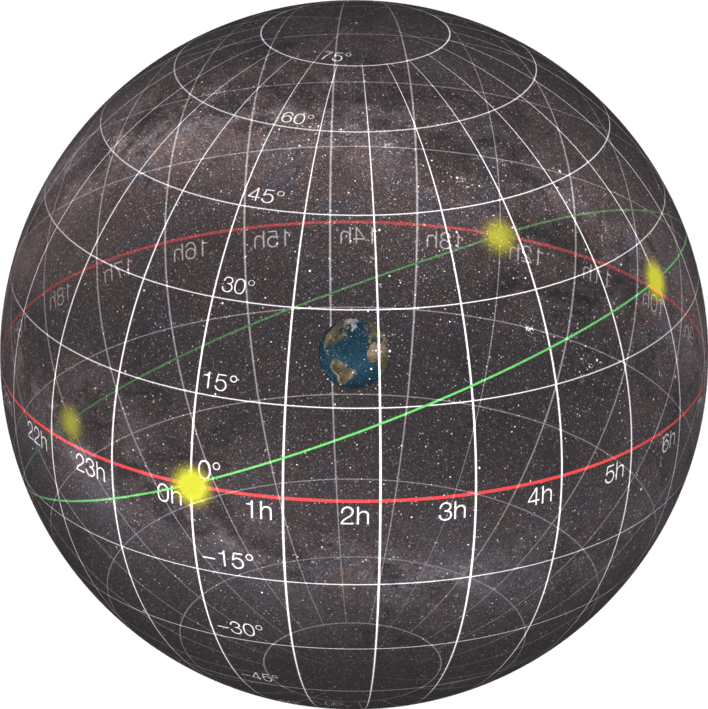 - Beginners first learn basic tools for exploring their local sky. They study “electromagnetic radiation”, where “radio” fits, and what observations reveal.
Go to “Basic Tools” Activities
2. Measuring the Earth’s Speed around the Sun
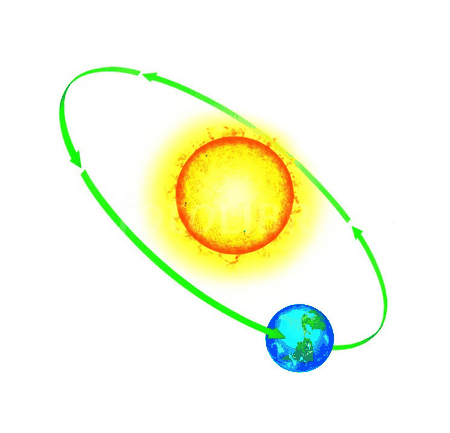 - Use gravity to predict Earth’s speed around the Sun. Then use the Doppler effect to measure radial motion. A horn telescope can test the prediction using the center of the Milky Way as a reference.
Go to “Earth Around Sun” Activities
3. The Milky Way Galaxy
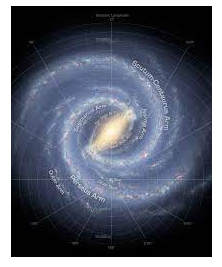 - The radio horn telescope is best at detecting neutral hydrogen in the Milky Way Galaxy. These lessons introduce the Milky Way’s basic features. Models help students understand our galaxy’s rotation.
4. Determining a Velocity Curve of the Milky Way Galaxy
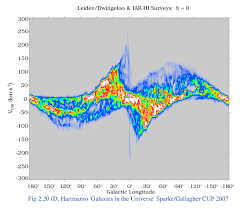
- This final DSPIRA project puts the completed horn telescope to work. Students use it to investigate the Milky Way’s rotation. A rudimentary map of the Milky Way can begin to be constructed from the data from the scope. This can then lead to discussions for the necessity of Dark Matter to account for the velocities being observed.
Go to Velocity Curve Activities
5. Interferometry With Horn Telescopes
The horn telescopes presented in the DSPIRA program can be used for interferometry. Simple two-slit diffraction concepts help explain the additive spectrometer’s spectra. This connection can be useful in teaching. However, using the horns to do multiplicative interferometry is more complex. This section introduces interferometry theory and methods for interpreting spectra. It also suggests investigations with a two-horn interferometer. A link to a LightWork memo that describes the theory and operation of a simple additive interferometer is included.
8 lessons in this module
-
The Milky Way Galaxy
The Radio Horn works best with the Milky Way, so let's learn about it
-
Astronomy Activity : Understanding Celestial Coordinate Systems
A quick introduction to different coordinate systems used in astronomy
-
Tools for Observational Astronomy
The Radio Horn works best with the Milky Way, so let's learn about it
-
How Fast Are We Moving?
Exploring how fast we are moving in the Milky Way Galaxy
-
Measuring the Earth's Speed around the Sun
This is a multi-activity lesson leading towards measuring the Speed of the Earth around the Sun
-
Determining a Velocity Curve of the Milky Way Galaxy
Instructions and handouts for determining a velocity curve of the MWG
-
Interferometry
Basic theory and instructions for operating a 2-horn interferometer
-
Astronomy Lecture Recordings
The astronomy lectures from the DSPIRA summer institute - six recordings and the slides - and where to read further