Cohort archive
The first summer
Nine teachers spent six weeks learning digital signal processing, building a radio telescope each, and taking it to Green Bank.
- 9teachers
- 5states
- 6weeks
- Morgantown + Green Bank

Who was here
The 2017 cohort
Nine teachers came from five states. All of them teach science in grades 8 through 12, and all of them went home with a working radio telescope.

- Jamie Avalos TX
- Howard Chun RI
- Denise Gipson WV
- Eric Goff WV
- Wendy Lee WV
- John Makous NC
- Adam Osborne WV
- Shane Price WV
- LaShonda Torbert MD
01
Foundation
The point of the program was to send teachers home able to run digital signal processing projects with their own students — so the first four weeks were daily lectures building a foundation in astronomy and DSP.
The astronomy covered the celestial sphere, astronomical and solar time, Kepler's laws, the H–R diagram, galaxies, and cosmology topics including dark matter and galaxy rotation curves. The signal processing track was modeled on an undergraduate DSP course, running from signal basics through to the fast Fourier transform.
02
Hands-on learning
Every lecture was followed by a lab. The labs took the abstract parts of DSP and made them tangible, which software-defined radio is unusually good at: GNU Radio is free and open source, it runs on cheap off-the-shelf radio hardware, and it is the same tool the lab uses on real instruments. The structured labs ended with each teacher writing their own software spectrometer — a component every radio telescope needs.
Then they built the telescope. That meant soldering a low-noise amplifier out of very small components and fabricating a horn antenna, in a design deliberately constrained to materials and tools you can buy at a hardware store. The horns were built in the industrial design workshop at WVU.
The whole group got their LNAs working, several of them having never soldered before. The horn construction turned into an assembly line. Between the spectrometer, the LNA and the horn, every teacher had a working radio telescope by the end of the four weeks in Morgantown.


03
Field experiments
The horn antennas were tested in Morgantown, then taken to the Green Bank Observatory.
At WVU
Several tests confirmed the telescopes worked before they traveled. LNA performance was measured in the lab, with the noise figure taken inside the Faraday cage in the RF room. A trial observing run with one of the horns was conducted on the roof of the Engineering Sciences Building.
At Green Bank Observatory
The last two weeks were spent on site. The teachers went through the observatory's full suite of outreach activities, including training on the 40 Foot telescope — and then tapped its signal, routing it through the SDR dongle and the GNU Radio spectrometer they had written at WVU. They also took the intermediate-frequency signal from the Green Bank Telescope through the same spectrometer and compared the result against the VEGAS back end.
Mostly, though, the time went on planning and executing observations with the horns. The teachers wrote their own observing plan to map the whole sky. Hot–cold measurements gave the gain and system temperature of the horn system, work on the antenna probe and the LNA continued in the GBO electronics lab, and workshops on site covered reducing the data the spectrometer produced.


04
Students and lessons
The Green Bank trip overlapped with the PING summer camp, which gave the teachers a room full of students to try the material on. They wrote and ran digital signal processing activities pitched at school-age children — the first version of what became the DSPIRA curriculum.
-
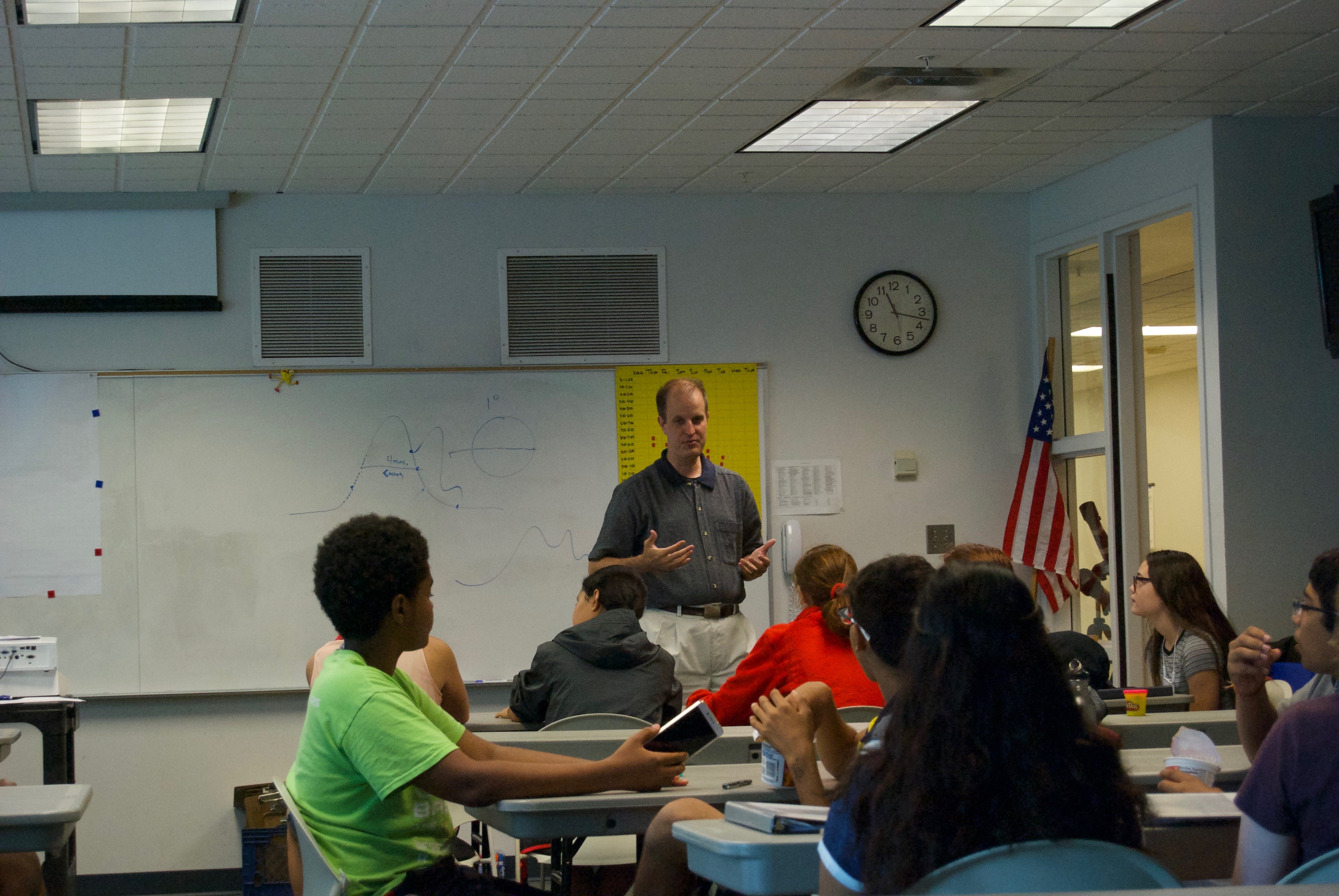
In the classroom. Introducing PING campers to digital signal processing. -
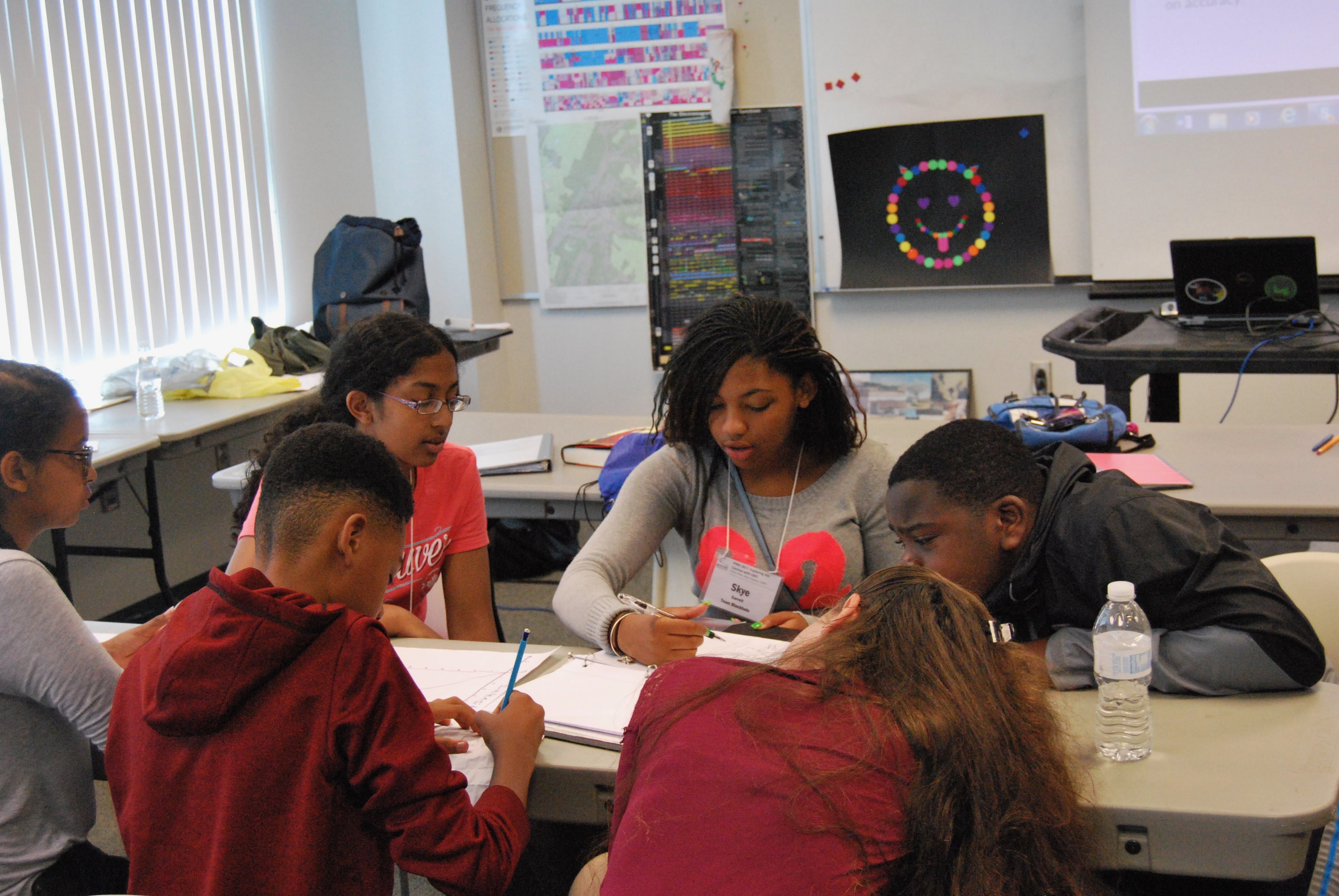
Group exercises. Every module ended in one. -

Sampling discretely. Sampling and quantization — the cornerstone of the whole subject. -
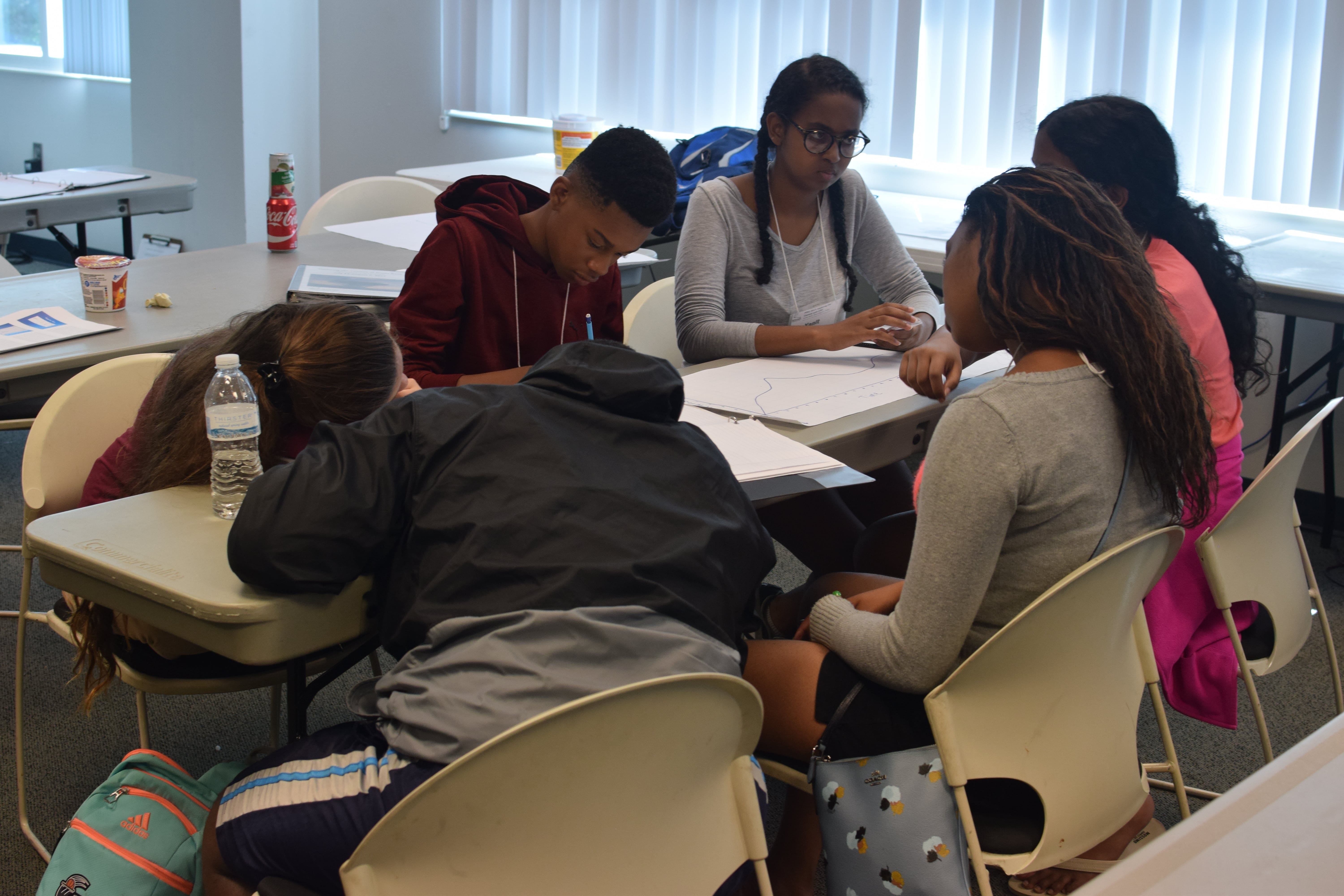
Campers working through one of the activities. -
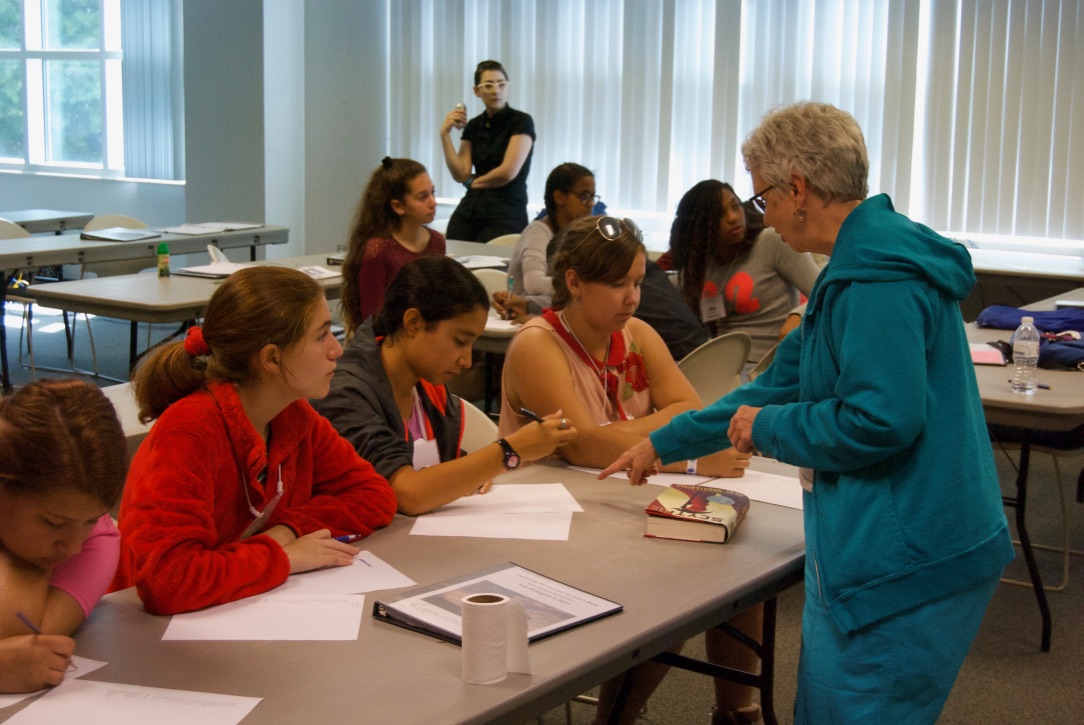
On encoding. A basic exercise in digital encoding. -
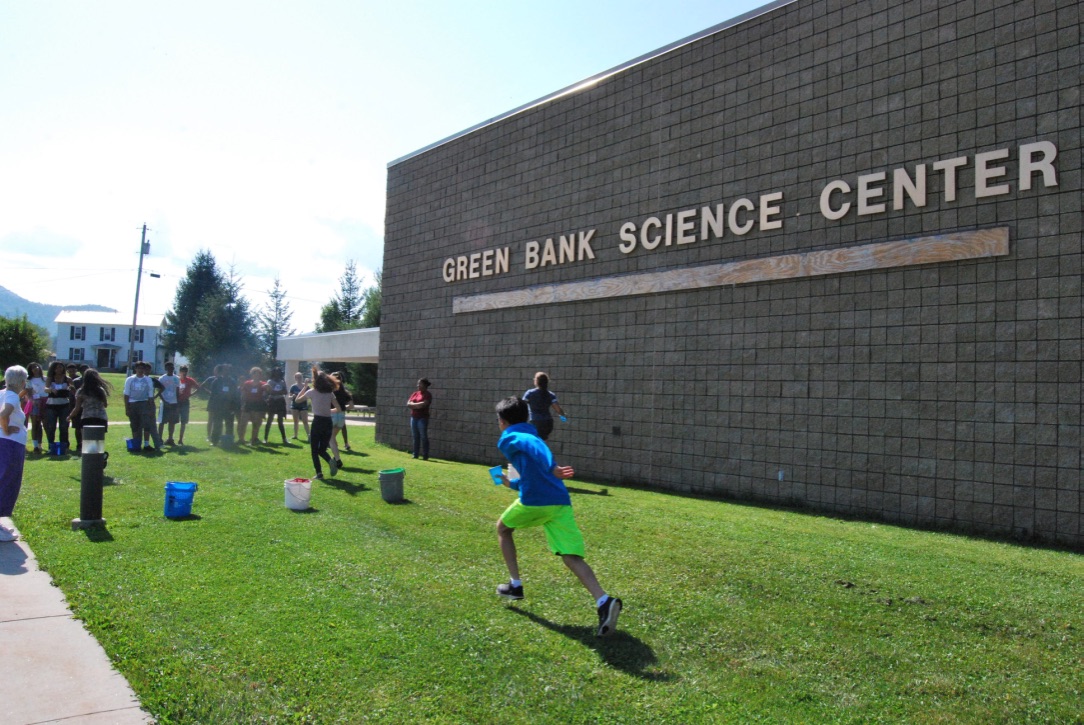
An outdoor activity. Filtering, outside the Green Bank Science Center.
05
What it opened up
The summer gave teachers research experience in engineering and radio astronomy, but it also made a wider point about amateur radio astronomy. The hardware is cheap and the design uses materials anyone can find — home insulation, paint thinner cans — so the barrier to entry is mostly curiosity. It also means a teacher can build more telescopes back at their own school without much logistical burden.
And these simple systems can do more than one thing. An aperture array built from several horns, for instance, opens up time-domain radio astronomy — a thread the 2018 cohort's undergraduates picked up directly.

Everything they used
Use the lessons online
51 lessons covering the astronomy, the hardware, the signal processing and the labs—free and maintained by the DSPIRA community.
← DSPIRA program Cohorts 2017 2018 2019