
Module
Observing
What to do once it is built and the software runs.
10 lessons, in the order they are meant to be worked through
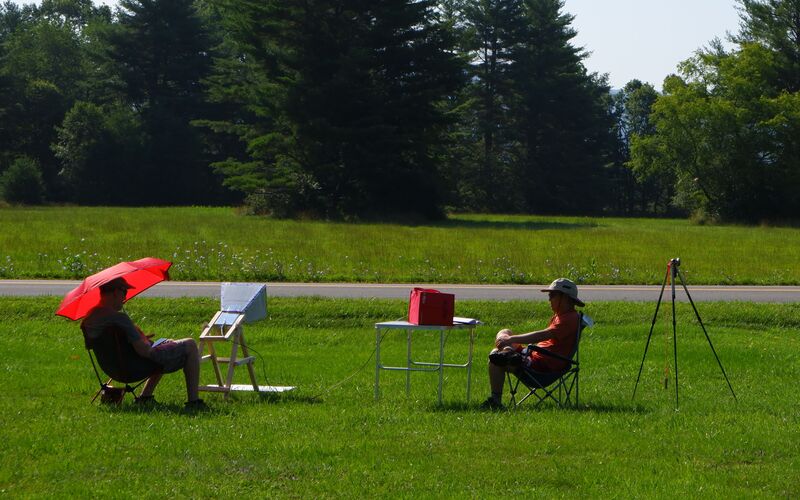
Once your horn and receiver work, these lessons introduce observing. Learn site selection, pointing, spectrum assessment, calibration against a known load, and interference recognition.
The telescope works in rural and urban locations with open sky. It also works in daylight and rain. Radio astronomy is not a clear-night hobby.
The module ends with two extensions to single-horn observing. First, turn drift scans into a sky map and rotation curve. Then add a second horn to make an interferometer.
Two operating procedures are documented as PDFs rather than as lessons:
- Setting up and operating a 2-horn interferometer — covers both the adding and the multiplying spectrometer programs.
- Adding interferometry to a 2-horn system — LightWork Memo 31.
For what an interferometer is actually good for, see Interferometry in the Astronomy module.
10 lessons in this module
-
What is a Horn Telescope?
Overview of what makes up a horn telescope and what it detects
-
What Can a Horn Telescope Measure?
An overview of what a horn telescope detects
-
Setting up the Telescope
Details on setting up the telescope for use
-
Horn Telescope Spectrometer Description
Description of the spectrometer_w_cal.grc program features
-
Running the spectrometer_w_cal.grc Program
Instructions on how to use the spectrometer_w_cal.grc program in GNU Radio
-
Instructions on Running spectrometer_w_cal
Instructions on how to use the *spectrometer_w_cal* program
-
How to Calibrate the Horn Telescope
The procedure for calibrating the telescope using the spectrometer_w_cal program is outlined.
-
Horn Operation Tutorials
Documents and videos explaining the operation of the horn telescope
-
Observations - Mapping the Sky and Measuring the Rotation Curve
Reduce the data your telescope produces - a drift map of the sky, and the rotation curve of the Milky Way
-
Setting Up a 2 Horn Interferometer
Details of setting up 2 horns for doing interferometry